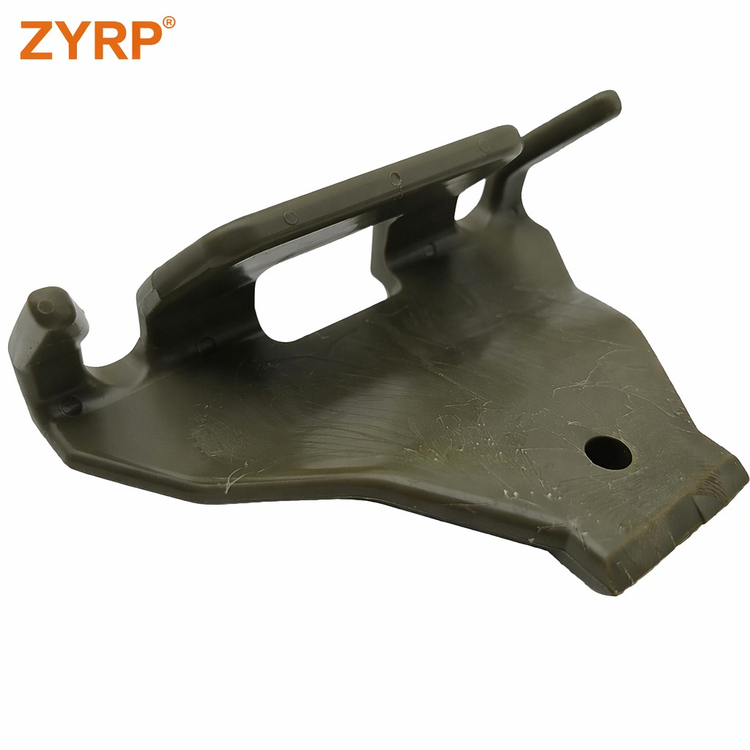
The slaughter hook represents one of the most critical safety components in poultry processing operations. Understanding the proper safety loads and testing specifications for your slaughter hook is essential for maintaining workplace safety, ensuring regulatory compliance, and preventing costly equipment failures. Every processing facility must establish clear protocols around slaughter hook capacity limits and verification procedures to protect workers and maintain operational continuity.

Proper slaughter hook management goes beyond purchasing equipment. It demands a comprehensive understanding of load ratings, material specifications, testing intervals, and failure prevention strategies. Processing facilities that invest in rigorous slaughter hook testing protocols and maintain accurate load documentation demonstrate stronger safety records and experience fewer downtime incidents.
Every slaughter hook manufactured must meet established load capacity standards that account for the dynamic stresses of processing operations. The typical slaughter hook designed for poultry applications carries a maximum working load limit that reflects both static weight and the repetitive motion stresses inherent in processing lines. Manufacturers establish these slaughter hook specifications through rigorous engineering analysis and material testing, ensuring each unit can safely handle peak operational demands without permanent deformation or catastrophic failure.
The slaughter hook's load capacity depends on multiple factors including hook diameter, material composition, suspension point design, and connection interface specifications. Facility managers must recognize that a slaughter hook operates under constant acceleration and deceleration forces, not merely static weight. This means the effective dynamic load on a slaughter hook far exceeds the simple weight of suspended birds, requiring conservative safety margins built into the original design specifications.
Industry standards dictate that every slaughter hook must incorporate a minimum safety factor that provides operational margin above anticipated peak loads. A properly engineered slaughter hook typically maintains a safety factor of at least 4 to 1, meaning the component can theoretically withstand four times the maximum expected working load before yielding. This safety factor protects against material defects, manufacturing variations, unforeseen operational surges, and wear-induced strength degradation over the slaughter hook's service life.
When specifying a slaughter hook for your facility, verify that the manufacturer clearly documents the safety factor incorporated into the design. This documentation becomes critical during incident investigations and regulatory compliance audits. A slaughter hook that lacks transparent safety factor documentation represents an unacceptable risk to your operation and may violate occupational safety standards in your jurisdiction.
Before deploying a new slaughter hook in your processing line, comprehensive pre-installation testing establishes a baseline performance profile and confirms manufacturer specifications. This initial slaughter hook verification should include visual inspection for surface defects, material inclusions, or manufacturing inconsistencies that could compromise performance. The pre-installation assessment of your slaughter hook must document exact dimensions, material certifications, heat-treat documentation, and any previous load history.
Baseline testing of a slaughter hook typically involves proof loading to a specified percentage of maximum capacity, often around 125 percent of the rated working load. This controlled test of your slaughter hook confirms that the component exhibits elastic behavior without permanent deformation. After the proof load test, the slaughter hook should be measured precisely to verify that dimensional changes remain within acceptable tolerances, typically no more than 0.5 percent elongation.
Ongoing maintenance of your slaughter hook requires periodic load testing at intervals established by industry standards and your facility's risk assessment. Most regulatory frameworks recommend that every slaughter hook undergo full proof load testing annually or at maximum every two years, depending on operational intensity. This periodic slaughter hook testing identifies material fatigue progression, corrosion effects, and creep phenomena that might not be immediately visible during routine inspection.
In-service verification of your slaughter hook goes beyond formal load tests to include daily visual inspections before operational startup. Processing supervisors should establish a checklist that examines each slaughter hook for signs of deformation, corrosion, paint flaking, or mechanical damage. These routine inspections of your slaughter hook represent the most cost-effective safety measure available and often detect developing problems before they evolve into equipment failure or worker injury incidents.
Slaughter hook equipment in poultry processing must comply with recognized industry standards including ASME specifications for overhead lifting equipment and federal workplace safety regulations. The slaughter hook specifications referenced in these standards establish minimum material grades, design factors, load testing procedures, and documentation requirements. Facilities operating within regulated industries must ensure their slaughter hook procurement, testing, and maintenance practices align with these mandatory standards to avoid citations and operational shutdowns.
Different jurisdictions may enforce variations in slaughter hook regulations, making it essential to research the specific requirements applicable to your facility's location. A slaughter hook that meets ASME specifications in one region might require additional certification or testing in another. Establishing close communication with your slaughter hook manufacturer and regulatory authorities ensures your equipment maintains continuous compliance across all applicable frameworks.
Comprehensive documentation forms the backbone of any effective slaughter hook safety program. Your facility must maintain detailed records for every slaughter hook in service, including original certification documents, proof load test results, periodic inspection reports, and any repairs or modifications. This slaughter hook documentation creates an audit trail that demonstrates due diligence during regulatory inspections and supports legal defense if incidents occur despite proper maintenance protocols.
Digital tracking systems have modernized slaughter hook documentation management, allowing facilities to correlate load test dates, maintenance intervals, and inspector certifications with specific equipment units. A well-maintained slaughter hook database enables predictive maintenance scheduling, identifies trending issues across your equipment inventory, and generates automated reminders when periodic testing deadlines approach. Implementing such systems transforms slaughter hook management from reactive maintenance into proactive risk mitigation.
Consider implementing a slaughter hook suspension system using advanced materials and slaughter hook designs that reduce fatigue accumulation and extend service life. Modern engineering has produced slaughter hook solutions that incorporate corrosion-resistant coatings, optimized stress distributions, and modular replacement components that enhance both safety and operational efficiency in your processing environment.
Standard slaughter hook load testing involves applying a controlled proof load equivalent to 125 percent of the component's maximum rated working load for a specified duration, typically between 5 and 15 minutes. After the test, inspectors measure the slaughter hook precisely to confirm that permanent elongation remains within acceptable tolerances. This periodic testing of your slaughter hook occurs annually or biennially depending on operational intensity and regulatory requirements in your jurisdiction.
Verify your slaughter hook compliance by reviewing the manufacturer's original certification documents, confirming load test dates align with required intervals, and conducting a visual inspection for deformation or corrosion. Contact your equipment supplier or a certified testing facility if you cannot locate slaughter hook documentation or if your equipment has not been tested within the required timeframe. A slaughter hook that cannot be verified as compliant should be removed from service immediately to prevent safety incidents.
The safe working load of a slaughter hook reflects the material strength, hook diameter, connection design, safety factor margin, and dynamic loading considerations specific to processing operations. Manufacturers calculate the slaughter hook working load through engineering analysis that accounts for both static bird weight and repetitive acceleration forces occurring in continuous processing lines. Always consult the slaughter hook manufacturer's technical specifications rather than assuming capacity based on physical appearance or similar-looking equipment.
 Hot News
2026-09-28
2026-09-21
2026-09-14
2026-09-08
2026-09-01
2026-08-12

Hebei Zunyan Technology provides high-quality poultry processing spare parts for global meat processors. Our stainless steel & plastic eviscerating shackles, chains, and custom CNC components ensure durability, precision, and fast dispatch. 30+ production lines, ISO-aligned quality, 48h shipping. Request quote today.
1901, Unit C19, Tongrui Business Building, Changjiang Sub-district, Yuhua District, Shijiazhuang City, Hebei Province, China
Copyright © 2026 Hebei Zunyan Technology Co., Ltd. All Rights Reserved Privacy Policy
 EN
EN