Selecting the right conveyor trolley bearings is one of the most critical decisions in industrial material handling operations. The systems operating in food processing, manufacturing, and logistics facilities depend entirely on bearing performance to maintain efficiency, reduce downtime, and extend equipment lifespan. Understanding the best industrial conveyor bearings ensures your system operates reliably under demanding conditions, whether moving products overhead or across warehouse floors.
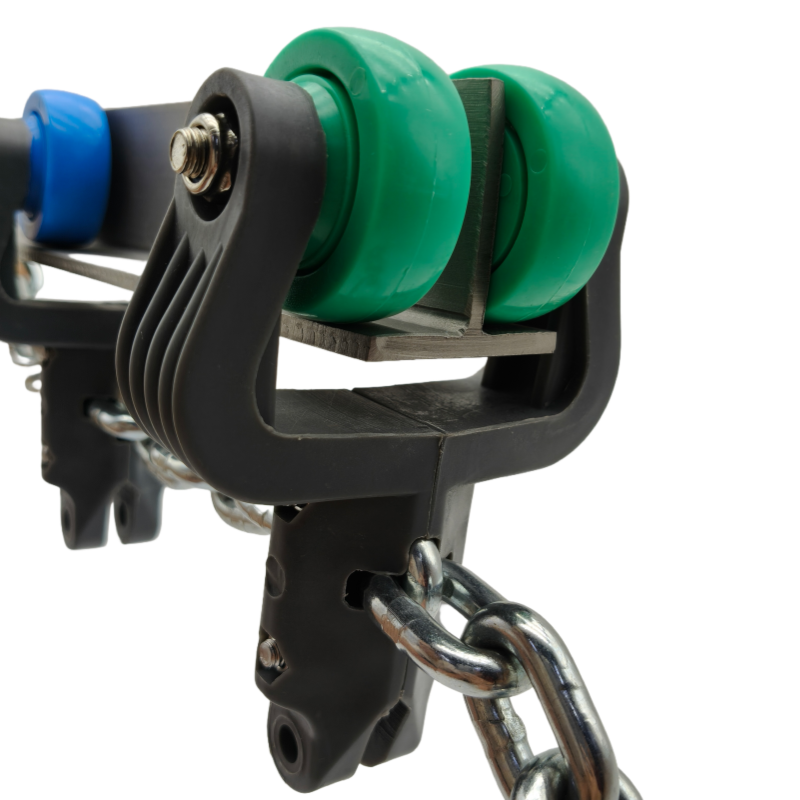
The choice between bearing types directly impacts operational costs, maintenance frequency, and safety compliance. Industrial environments present specific challenges such as temperature extremes, moisture exposure, contamination, and constant mechanical stress. Comparing options like ball vs roller bearings or evaluates polymer conveyor bearings versus stainless steel conveyor bearings reveals distinct advantages that must align with your facility's unique production requirements.
Ball bearings remain a widely used option in overhead systems across industrial sectors. In any ball vs roller bearings analysis, ball bearings excel in applications requiring moderate to high speeds, making them ideal for continuous-duty operations in automotive and processing environments. These conveyor trolley bearings utilize rolling balls to reduce friction, allowing material transport while consuming minimal energy.
However, standard ball bearings have load limitations. When your equipment regularly handles extremely heavy loads, alternative industrial conveyor bearings may outperform traditional ball bearing designs under severe impact conditions.
Roller bearings provide superior load capacity compared to ball bearings, making them the preferred choice for heavy-duty applications. Evaluating ball vs roller bearings shows that roller designs feature cylindrical or tapered elements that distribute loads across a larger surface area, enabling your system to handle substantial weight without premature wear.
The primary trade-off with heavy-duty roller conveyor trolley bearings is increased friction compared to ball designs, requiring slightly more drive power. However, the extended bearing life and reduced maintenance frequency often justify the higher initial investment for facilities handling consistent heavy loads.
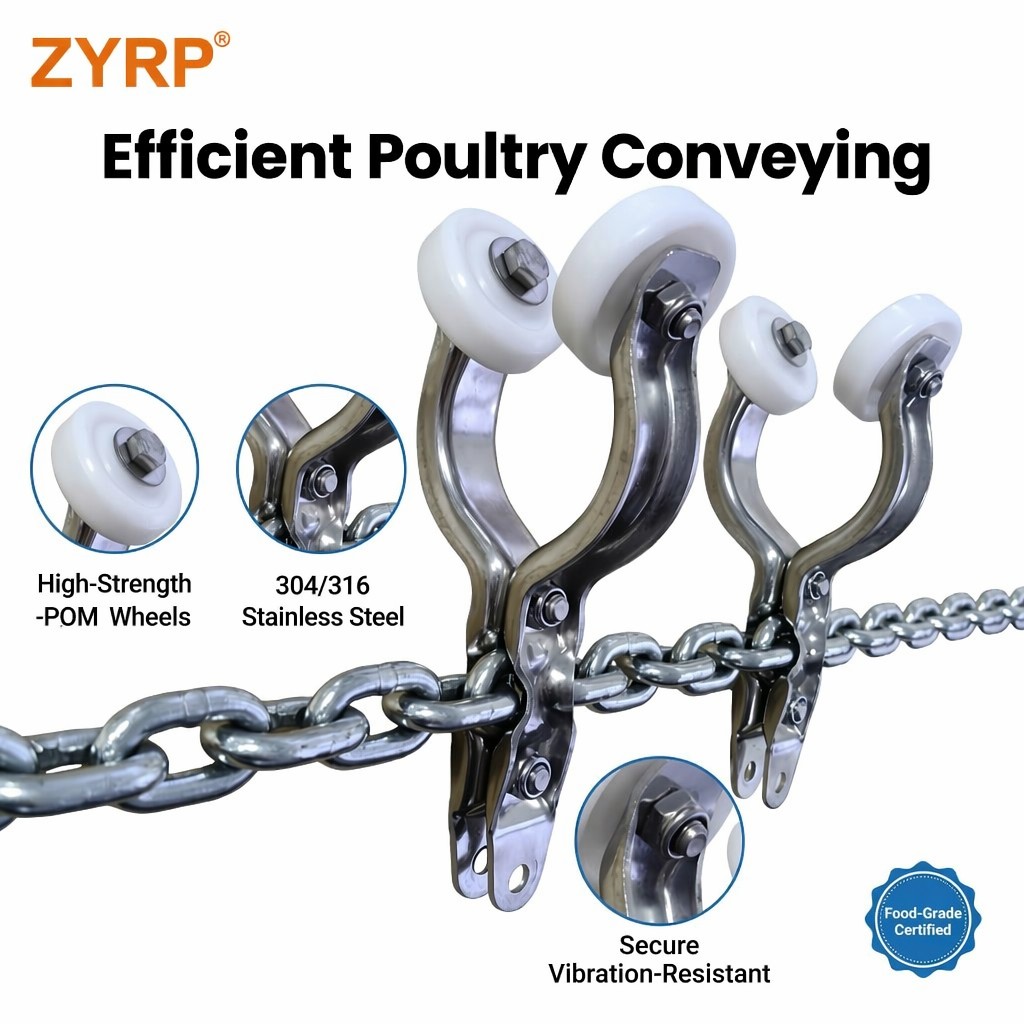
Traditional stainless steel conveyor bearings deliver predictable performance, excellent load capacity, and proven durability under challenging physical conditions. Standard steel designs withstand high mechanical stress and temperature variations effectively, though they require appropriate lubrication and seals in moisture-rich environments like meat processing plants.
On the other hand, polymer conveyor bearings have emerged as valuable alternatives for specific applications requiring frequent washdown and sanitation. These advanced industrial conveyor bearings resist corrosion naturally, eliminating rust formation and contamination risks. Many polymer conveyor bearings operate without traditional grease, simplifying maintenance protocols. The primary trade-off involves lower load capacities compared to stainless steel conveyor bearings.
Modern bearing technology incorporates specialized coatings and material hybrids that extend service life in aggressive processing environments. Stainless steel conveyor bearings provide superior corrosion resistance for machinery operating in chemical, pharmaceutical, or coastal facilities. Ceramic-hybrid conveyor trolley bearings combine steel races with ceramic rolling elements, offering improved speed capability and reduced heat generation compared to standard all-steel designs.
Proper installation fundamentally determines the lifespan and reliability of your industrial conveyor bearings. Misalignment during installation causes premature wear, increased noise, and accelerated failure rates. Key implementation steps include:
Precision Alignment: Verify rail and housing alignment to prevent uneven load distribution on your conveyor trolley bearings.
Thermal Monitoring: Use thermal imaging and vibration analysis to establish baseline health metrics for all industrial conveyor bearings.
Scheduled Inspection: Establish inspection routines based on operating hours and load intensity to identify wear before failure occurs.
Lubrication management represents a critical factor in extending the service life of conveyor trolley bearings. Whether maintaining heavy roller units or stainless steel conveyor bearings, each setup requires specific lubricant types, viscosity grades, and relubrication intervals. Over-lubrication generates excessive heat, while inadequate lubrication accelerates wear.
Predictive maintenance programs use condition monitoring equipment to track temperature, vibration patterns, and acoustic emissions in real time. Implementing these advanced monitoring systems for your conveyor trolley bearings enables cost-effective maintenance planning and optimizes production uptime.
When evaluating industrial conveyor bearings, consider load capacity requirements, operating speeds, ambient environmental conditions, washdown exposure, and total cost of ownership. Comparing ball vs roller bearings helps determine speed versus load capabilities, while choosing between polymer conveyor bearings and stainless steel conveyor bearings addresses hygiene and corrosion needs.
Most facilities benefit from monthly visual checks and quarterly detailed assessments using vibration analysis. Replacement intervals for conveyor trolley bearings typically range from two to five years, depending heavily on load intensity, operating speed, sanitation routines, and overall maintenance quality.
Yes, polymer conveyor bearings can replace steel options in systems where load requirements permit and washdown conditions warrant the substitution. Always verify load capacity compatibility, as polymer conveyor bearings support lower weights than stainless steel conveyor bearings.
 Hot News
2026-09-28
2026-09-21
2026-09-14
2026-09-08
2026-09-01
2026-08-12

Hebei Zunyan Technology provides high-quality poultry processing spare parts for global meat processors. Our stainless steel & plastic eviscerating shackles, chains, and custom CNC components ensure durability, precision, and fast dispatch. 30+ production lines, ISO-aligned quality, 48h shipping. Request quote today.
1901, Unit C19, Tongrui Business Building, Changjiang Sub-district, Yuhua District, Shijiazhuang City, Hebei Province, China
Copyright © 2026 Hebei Zunyan Technology Co., Ltd. All Rights Reserved Privacy Policy
 EN
EN