Conducting a poultry processing spare parts criticality audit is an essential operational discipline that directly impacts production efficiency, safety compliance, and bottom-line profitability in modern poultry facilities. This systematic assessment identifies which spare components are truly critical to continuous operation versus which items can tolerate longer lead times. Performing a structured spare parts criticality assessment transforms maintenance strategy from reactive crisis management into predictive resource allocation, yielding sustained poultry processing maintenance optimization. Facilities that invest in this analysis typically reduce unplanned downtime by 25 to 40 percent while drastically streamlining their spare parts inventory management.
Executing a poultry processing spare parts criticality audit requires a structured methodology that evaluates each component's impact on throughput, product quality, worker safety, and regulatory compliance. Combining technical line knowledge with failure data and supplier lead times helps facility managers optimize their spare parts inventory management. By categorizing parts into criticality tiers, plant managers can make informed decisions about inventory buffers, supplier relationships, and long-term poultry processing maintenance optimization.
Criticality within a poultry processing spare parts criticality audit extends far beyond identifying components that stop the line. A thorough spare parts criticality assessment considers how a component failure creates cascading consequences across multiple operational dimensions simultaneously. When conducting a spare parts criticality assessment, evaluate failure speeds, substitute availability, emergency procurement expenses, and safety risks. For instance, a bearing in a primary conveyor drive requires a different spare parts inventory management approach than a bearing in a secondary circulation pump.
Effective poultry processing maintenance optimization employs a weighted scoring framework during every poultry processing spare parts criticality audit. Each component receives scores across production impact, safety risk, supplier availability, replacement complexity, and downtime cost (1–10 scale). Multiplying each score by an organizational weight factor ensures that your spare parts criticality assessment reflects real operational priorities. Components scoring above a threshold trigger increased inventory buffers, dual-source sourcing, and proactive replacement within your spare parts inventory management system.
Begin your poultry processing spare parts criticality audit by assembling historical failure data and replacement logs. Reviewing maintenance records helps identify recurring component breakdowns and calculate Mean Time Between Failures (MTBF). Documenting supplier lead times is vital for spare parts inventory management—a component with a 12-week lead time demands a vastly different strategy than one available within 48 hours. Analyzing procurement costs and shipping fees further enhances your overall poultry processing maintenance optimization framework.
Organize your spare parts criticality assessment by mapping components across each operational section:
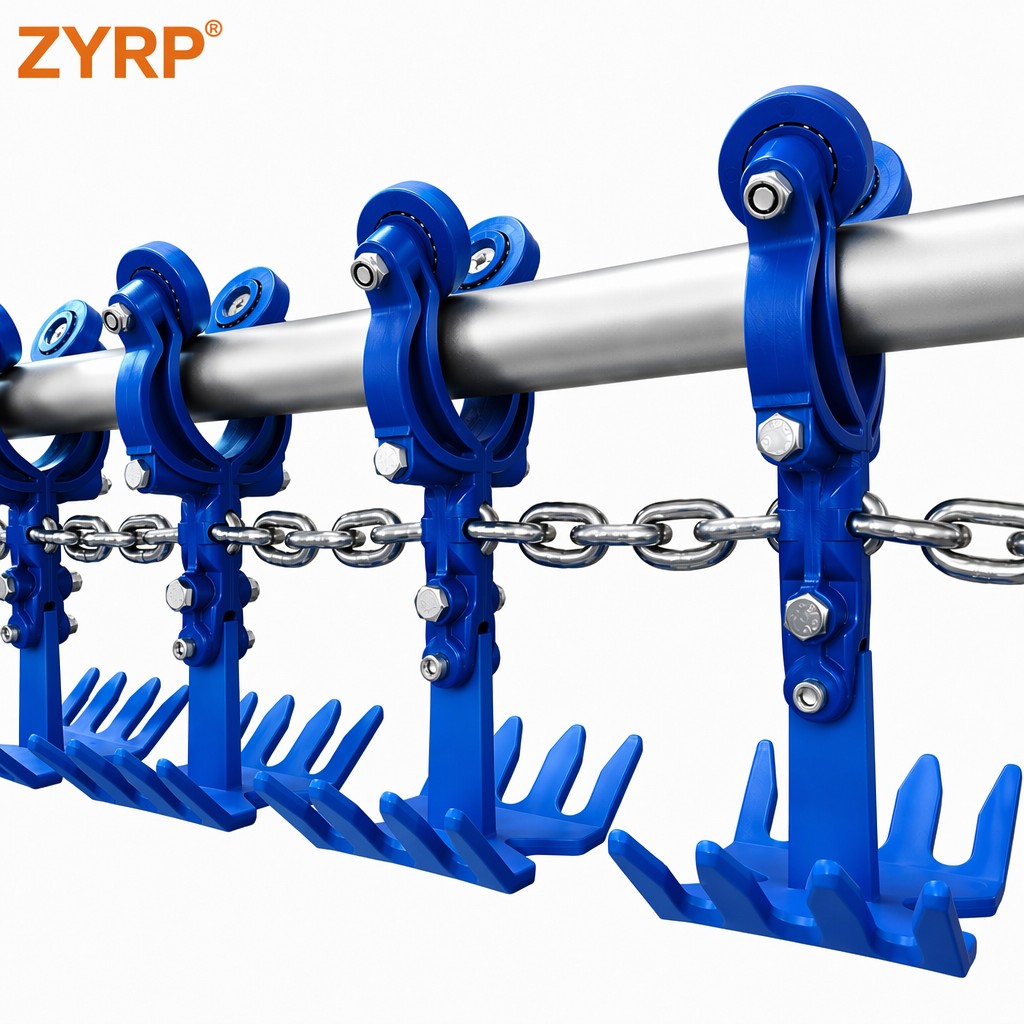
Receiving & Hanging: Drive chains, shackles, and speed control sensors.
Stunning & Bleeding: Automated cabinets, electrodes, and power control modules.
Evisceration & Chilling: Cutting blades, venters, pump seals, and auger drives.
Packaging Lines: Conveyor belts, weigh-scale bearings, and sealing heads.
Mapping your facility pinpoints criticality clusters where cascading failures are likely. Understanding these dependencies ensures that your poultry processing spare parts criticality audit captures full component interdependency, advancing spare parts inventory management.
After completing the spare parts criticality assessment, group components into distinct management tiers to optimize spare parts inventory management:
Tier 1 (Critical): High-scoring items in the poultry processing spare parts criticality audit require 2–3 safety stock units and dual-supplier agreements.
Tier 2 (Important): Moderate-impact parts warranting 1–2 safety units and standard supplier relationships.
Tier 3 (Routine): Low-impact parts managed through just-in-time spare parts inventory management.
This tiered approach lowers carrying costs while protecting the facility from major outages, driving continuous poultry processing maintenance optimization.
Your poultry processing spare parts criticality audit should directly feed into planned component life cycles. For high-criticality items with predictable wear patterns—such as bearings, belts, and seals—establish replacement schedules based on operational hours rather than waiting for failure. Integrating real-time condition monitoring (vibration analysis, thermal imaging) into your poultry processing maintenance optimization strategy allows technicians to detect early wear, executing timely replacements that protect production continuity.
Facilities should review their poultry processing spare parts criticality audit annually, or whenever significant machinery upgrades occur. Quarterly reviews of failure data help refine your spare parts criticality assessment and update spare parts inventory management parameters dynamically.
Implementing a poultry processing spare parts criticality audit typically cuts carrying costs by 15–30% through improved spare parts inventory management. Furthermore, structured poultry processing maintenance optimization reduces emergency shipping fees, overtime labor, and costly unplanned downtime.
For high-criticality components identified in your spare parts criticality assessment, establish contracts with at least two qualified vendors. For optimal spare parts inventory management, negotiate consignment inventory arrangements for top-tier parts to eliminate capital lockup while ensuring immediate availability.
 Hot News
2026-09-28
2026-09-21
2026-09-14
2026-09-08
2026-09-01
2026-08-12

Hebei Zunyan Technology provides high-quality poultry processing spare parts for global meat processors. Our stainless steel & plastic eviscerating shackles, chains, and custom CNC components ensure durability, precision, and fast dispatch. 30+ production lines, ISO-aligned quality, 48h shipping. Request quote today.
1901, Unit C19, Tongrui Business Building, Changjiang Sub-district, Yuhua District, Shijiazhuang City, Hebei Province, China
Copyright © 2026 Hebei Zunyan Technology Co., Ltd. All Rights Reserved Privacy Policy
 EN
EN