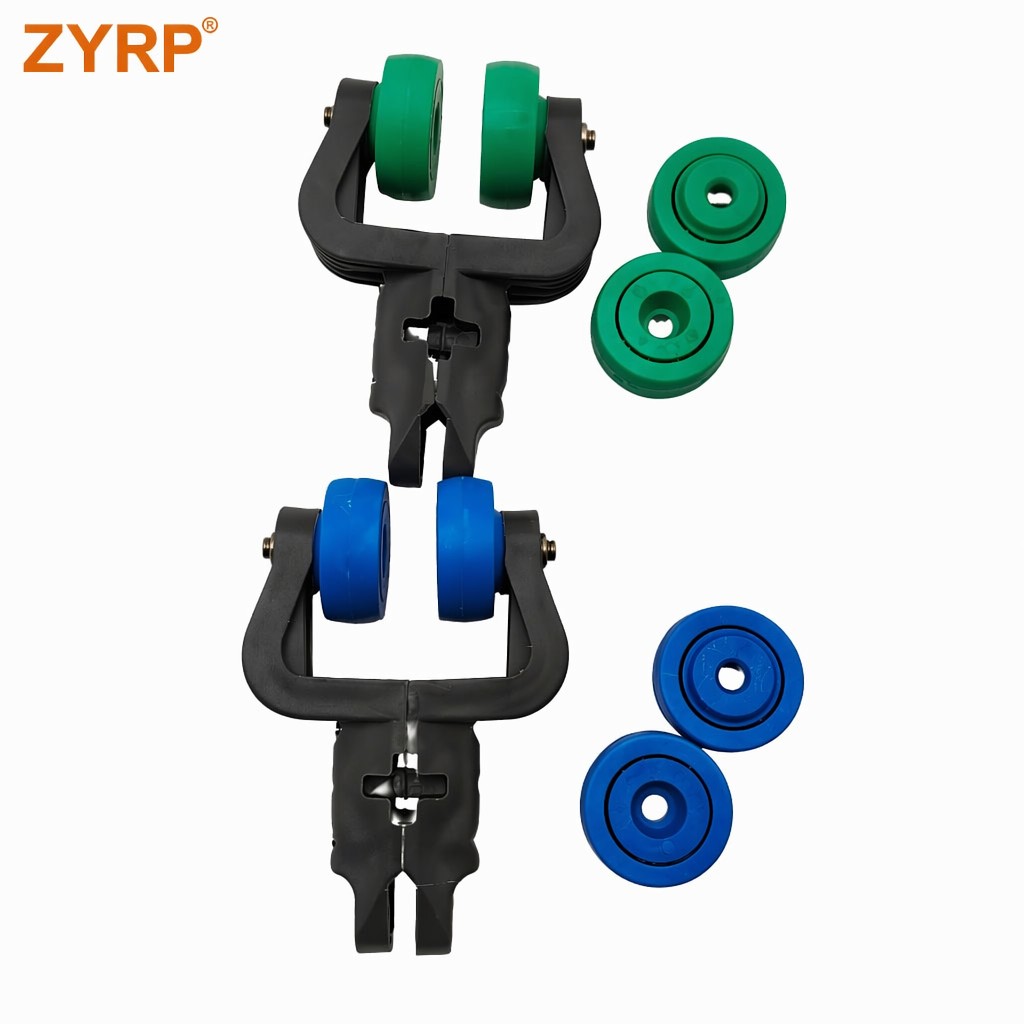
Worn plucker rubber fingers can affect poultry skin by changing how force is applied during defeathering. The relationship is not simply that older fingers always cause damage: contact also depends on machine setup, bird condition, and line operation. Understanding how plucker rubber fingers change with use helps processors investigate skin tears, bruising, or incomplete feather removal without assuming a single cause.
The practical goal is to recognize when plucker rubber fingers are no longer contacting birds consistently, then connect that condition to product observations. A measured inspection can distinguish wear-related changes from excessive machine pressure, poor adjustment, or upstream handling issues. This article explains the skin impact, the wear signs worth tracking, and a maintenance approach that supports informed decisions on a processing line.
During operation, plucker rubber fingers repeatedly bend and recover as they contact birds. Over time, exposure to mechanical stress, cleaning routines, and the operating environment can change their flexibility or surface texture. When plucker rubber fingers become stiff, cracked, or uneven, they may not deflect in the same way as serviceable fingers, altering the character of contact with the skin.
A worn tip or roughened surface can create a different interaction from a smooth, flexible one. Depending on machine settings and bird position, that difference may contribute to abrasion or localized tearing, especially where skin is delicate or already compromised. Plucker rubber fingers do not act alone, so a skin defect should be treated as evidence to investigate rather than proof that finger wear is its sole cause.
Uneven wear matters because birds encounter multiple contact points as they move through the equipment. If plucker rubber fingers vary noticeably across a section, force may be distributed inconsistently, leaving one area under-plucked while another receives more contact. Such variation can complicate efforts to assess skin quality and can prompt unnecessary adjustments if the underlying wear pattern is not checked first.
Skin impact may appear as surface scuffing, small tears, or damage concentrated around exposed areas, but those observations need context. Review where defects occur, whether they repeat across birds, and whether the pattern aligns with a particular machine zone. Comparing those findings with plucker rubber fingers in the same zone offers a more useful starting point than judging the whole line from isolated defects.
Incomplete feather removal can also coexist with skin damage. If operators respond by increasing contact or changing settings before examining the equipment, plucker rubber fingers that are already worn may continue to produce inconsistent results. A balanced review considers both removal quality and skin condition, because optimizing only one measure can shift the problem rather than resolve it.
A visual check should look for splits, missing material, flattened or distorted shapes, hardened areas, and obvious differences between neighboring positions. Assess plucker rubber fingers across the working area, not just at an easy-to-reach point. A localized group of damaged fingers may explain a localized product pattern, while widespread wear can suggest a broader maintenance need.
Inspection becomes more informative when it is recorded consistently. Note the equipment location, observed condition, date, and related product-quality findings so the team can compare shifts or maintenance intervals. Tracking plucker rubber fingers this way helps separate gradual deterioration from a sudden process change and gives maintenance staff a concrete basis for prioritizing attention.
Operators can also check whether adjacent fingers move and recover in a reasonably similar manner, following site safety procedures and equipment guidance. Do not rely on touch alone or inspect moving machinery. A safe, stopped-equipment inspection helps reveal whether plucker rubber fingers have lost flexibility or developed a shape that could create uneven contact during production.
Record defect type and location rather than using a broad label such as poor skin quality. Compare those observations with bird size, incoming condition, line speed, and relevant machine settings. If defects align with an area where plucker rubber fingers show wear, the combination strengthens the case for a focused equipment check, though it does not eliminate other possible contributors.
Look for repeatability before making a major adjustment. A one-time issue may reflect variation in a batch or handling event, while a persistent pattern near the same contact area deserves closer review. Checking plucker rubber fingers alongside process records allows the team to test a likely cause and observe whether a targeted correction improves skin condition without reducing feather removal quality.
Replacement decisions are strongest when they follow observable condition and process needs rather than an arbitrary assumption that all components wear at the same rate. Establish an inspection routine suited to operating intensity, cleaning practices, and equipment instructions. When plucker rubber fingers show cracks, deformation, or inconsistent contact, document the finding and assess the affected area promptly.
Changing only visibly compromised components may be appropriate in some situations, while grouped replacement may better restore uniformity when wear is widespread. The choice depends on the distribution of damage, the machine design, and the site’s maintenance procedure. For plucker rubber fingers, teams should confirm compatibility and follow the equipment maker’s installation guidance rather than improvise a fit.
After replacement, inspect the installation and verify that the working area is consistent before returning to normal production. A controlled review of product condition can show whether the intervention helped. If plucker rubber fingers are renewed but skin damage remains, revisit pressure, spacing, bird presentation, and upstream handling instead of repeating the same replacement without further diagnosis.
A useful maintenance loop links production observations, inspection records, corrective work, and follow-up checks. Quality staff can report where skin defects occur, while maintenance staff assess plucker rubber fingers at the corresponding positions. Reviewing these details together supports targeted action and reduces the risk of changing machine settings to compensate for a component condition that has not been verified.
Training matters because different observers may describe the same wear in different ways. Agree on clear condition terms and use photographs or documented examples where permitted by site practice. Consistent descriptions of plucker rubber fingers make trend reviews more reliable and help teams notice early deterioration before it becomes a recurring quality concern.
Finally, treat product quality as a balance between effective feather removal and careful skin handling. Recheck both outcomes after maintenance or adjustment, and retain records that show what changed. This disciplined approach makes plucker rubber fingers one part of a broader process-control review, rather than a catch-all explanation for every defect observed on the line.
They can contribute to skin damage when wear changes flexibility, shape, or contact consistency. However, plucker rubber fingers are only one possible factor, so check machine settings, bird condition, and handling alongside the observed wear.
Report cracks, deformation, missing material, hardened surfaces, and uneven condition across neighboring positions. Relating those observations to where skin defects occur makes plucker rubber fingers easier to assess as a potential contributor.
Use condition, equipment guidance, and process results to make the decision. Replace or service plucker rubber fingers when visible deterioration or inconsistent performance warrants action, then verify both skin quality and feather removal after the work.
 Hot News
2026-11-23
2026-11-16
2026-11-09
2026-11-02
2026-10-29
2026-10-22

Hebei Zunyan Technology provides high-quality poultry processing spare parts for global meat processors. Our stainless steel & plastic eviscerating shackles, chains, and custom CNC components ensure durability, precision, and fast dispatch. 30+ production lines, ISO-aligned quality, 48h shipping. Request quote today.
1901, Unit C19, Tongrui Business Building, Changjiang Sub-district, Yuhua District, Shijiazhuang City, Hebei Province, China
Copyright © 2026 Hebei Zunyan Technology Co., Ltd. All Rights Reserved Privacy Policy
 EN