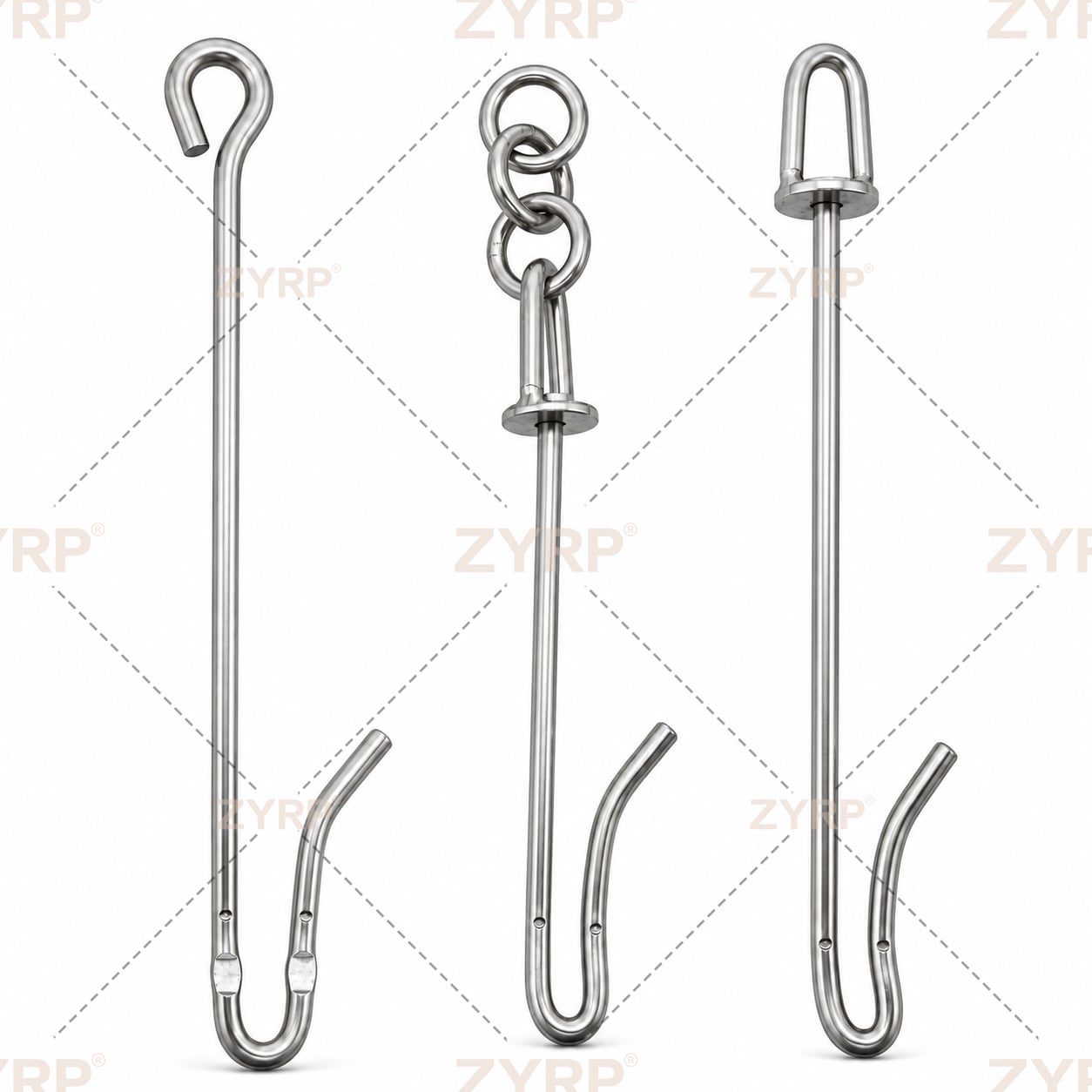
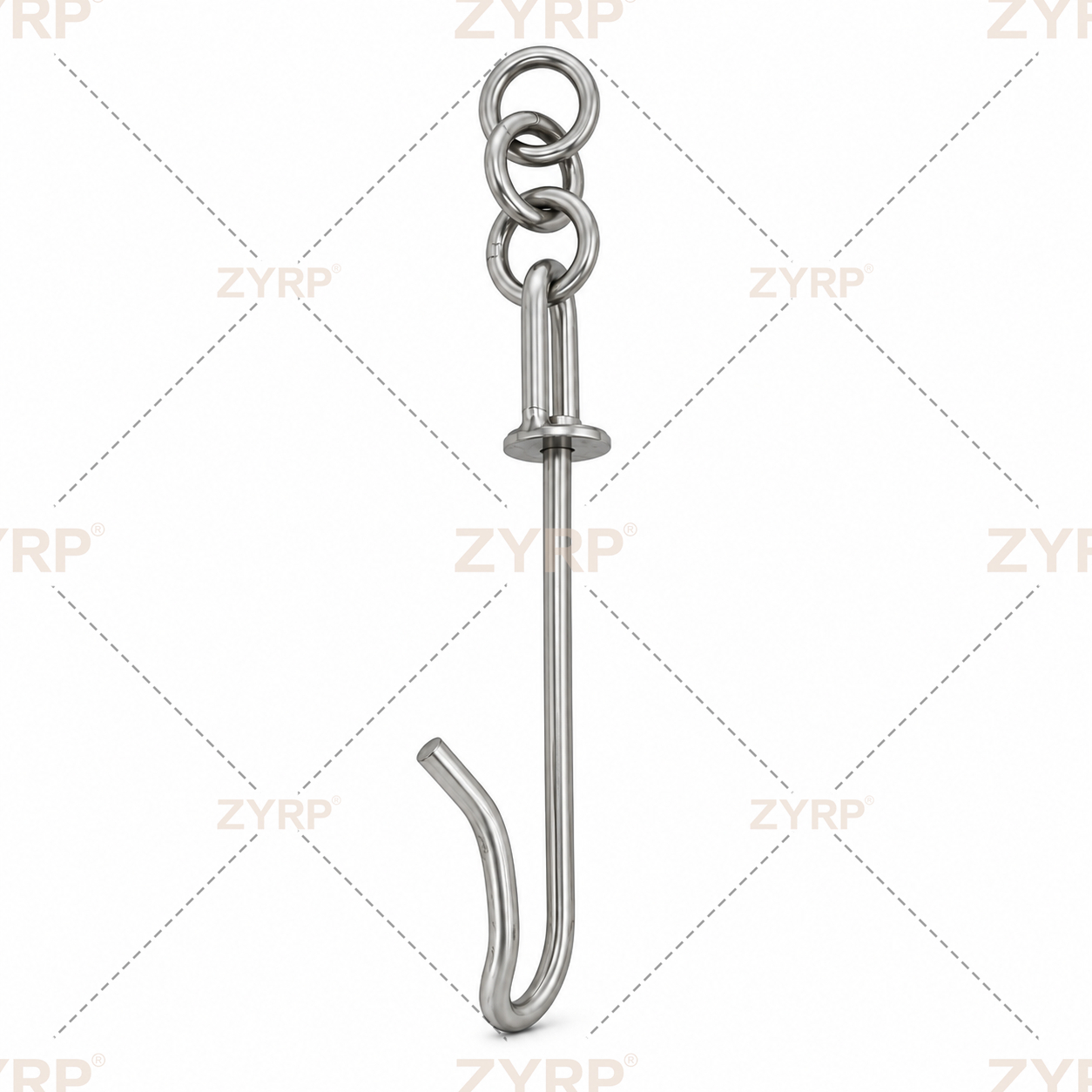
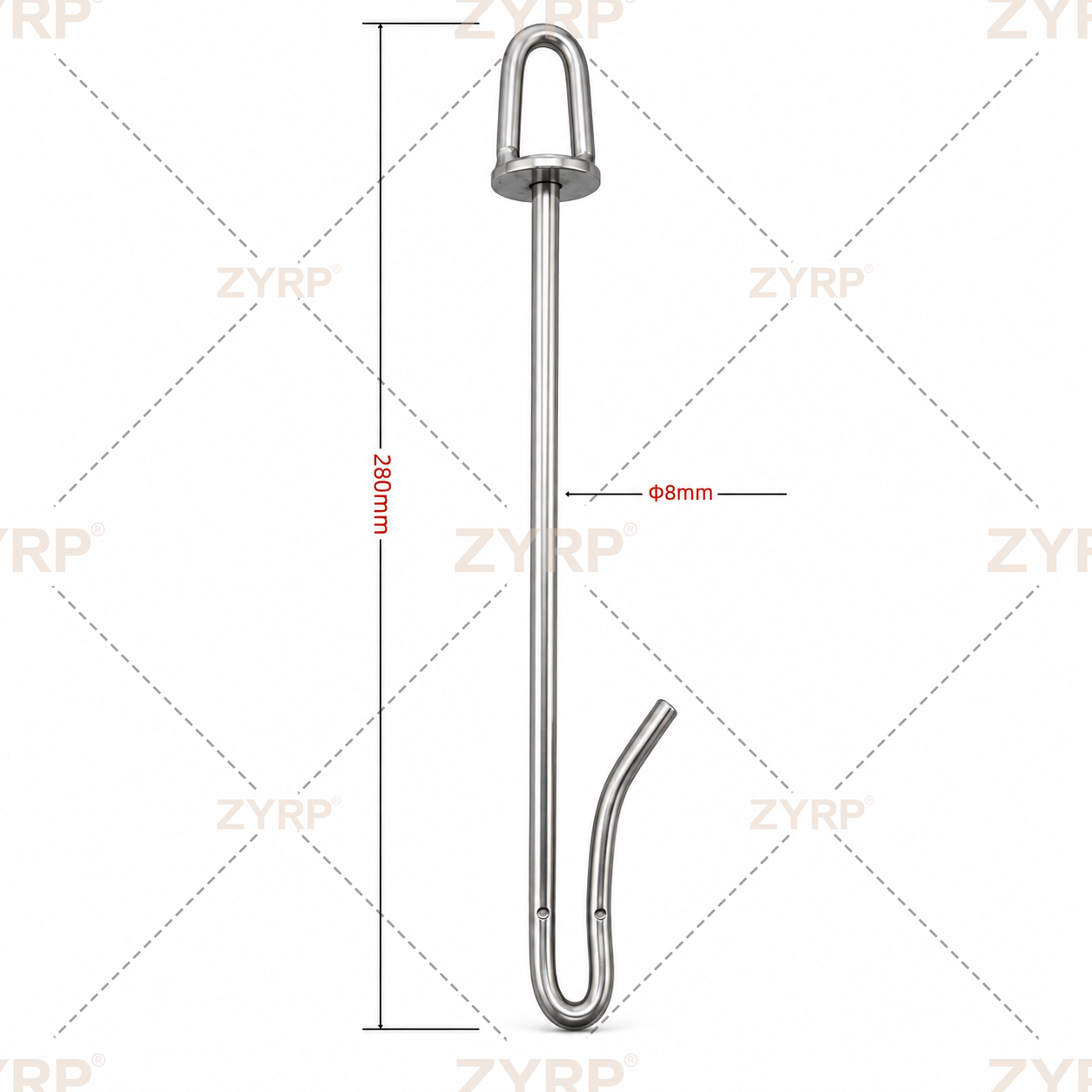
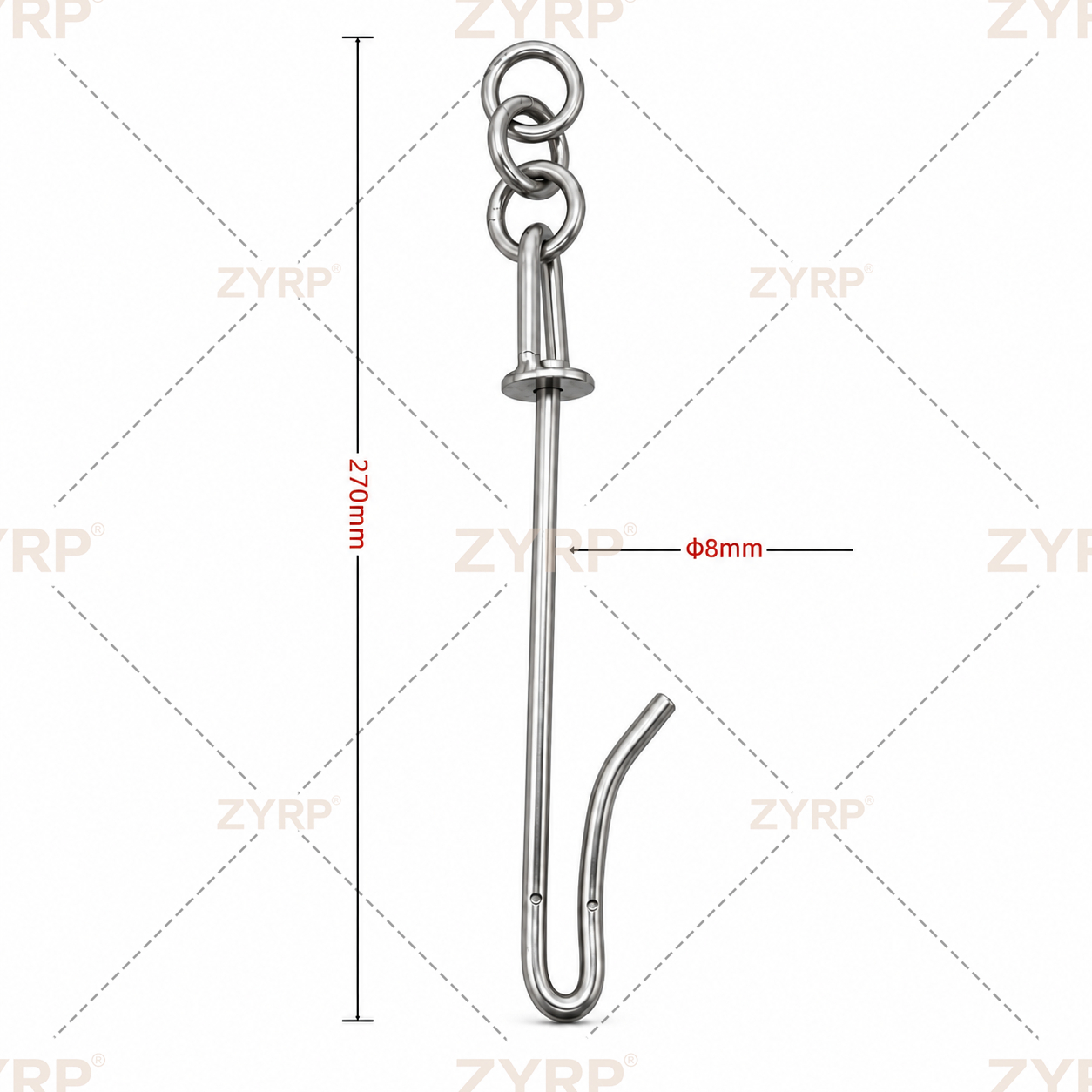
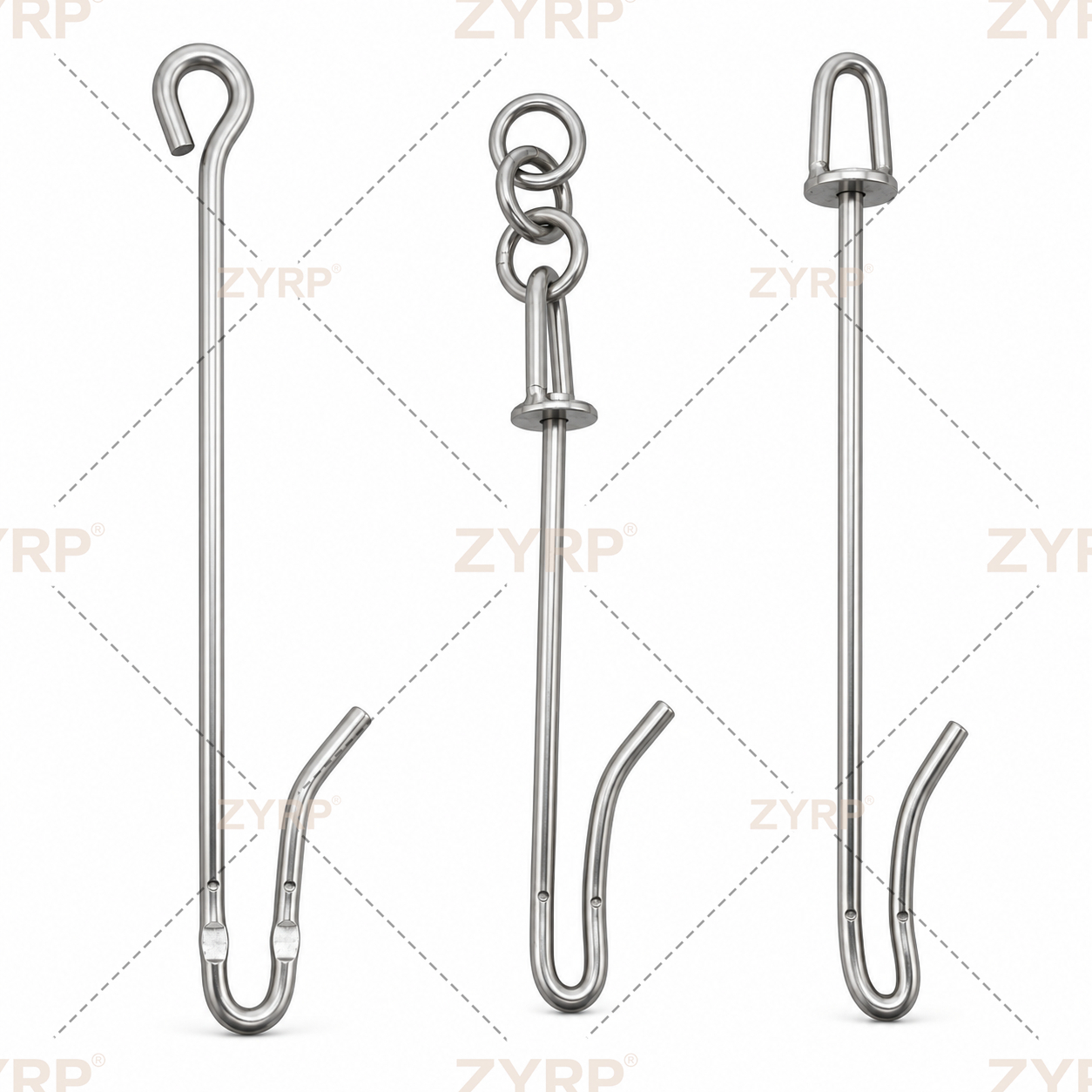
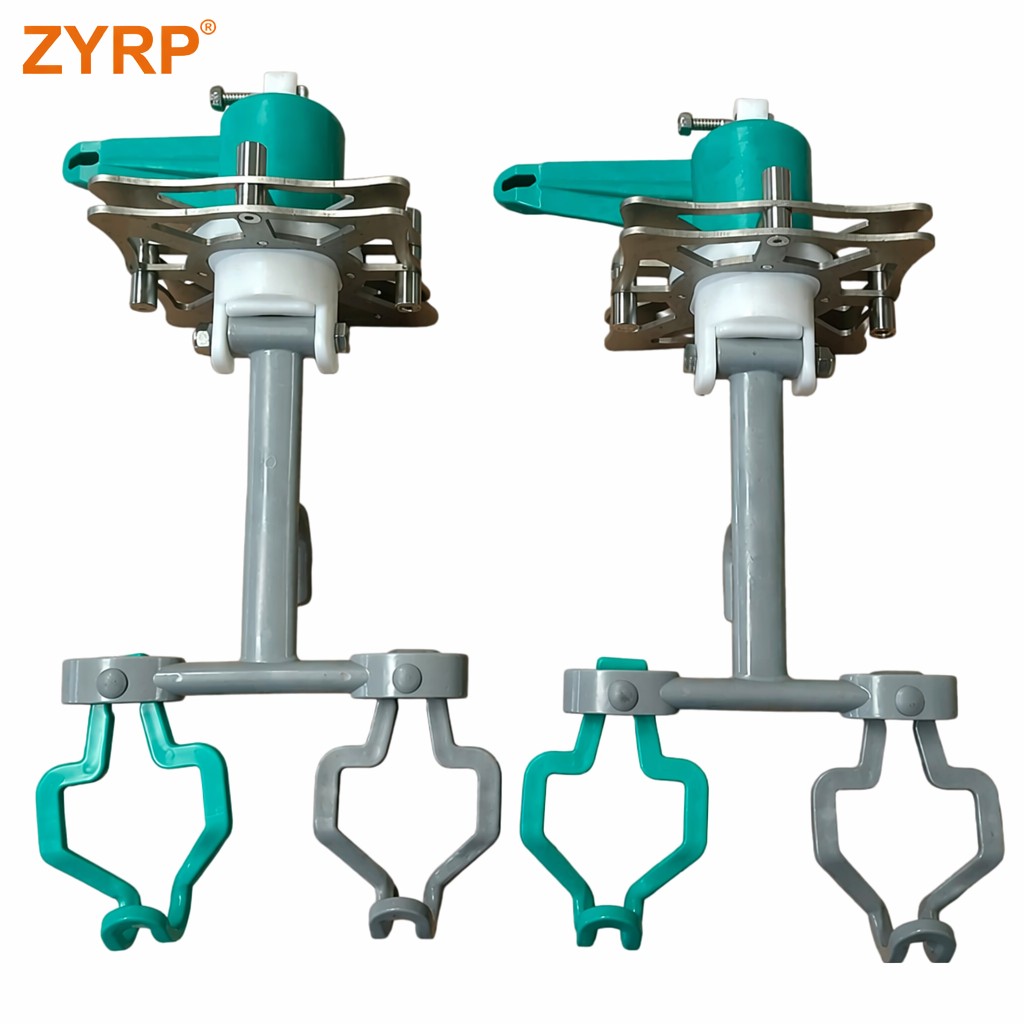
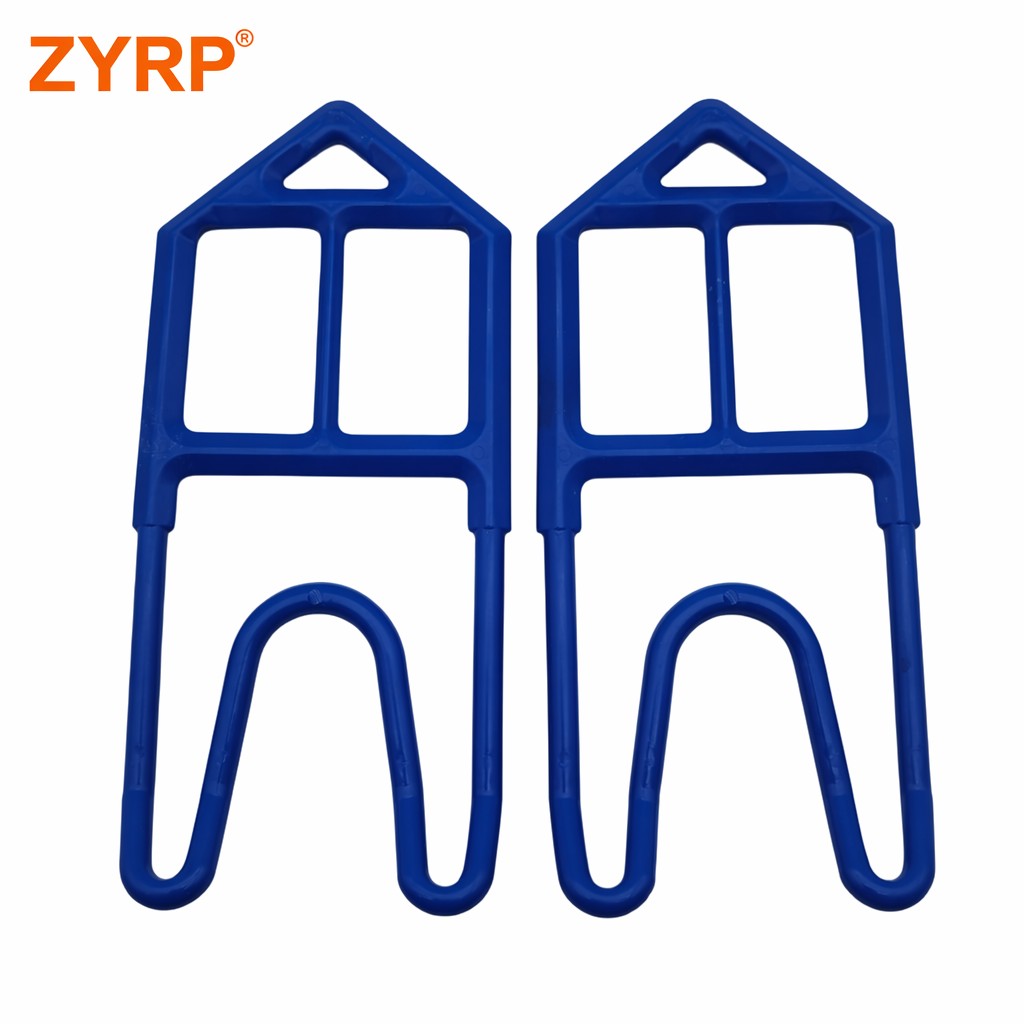
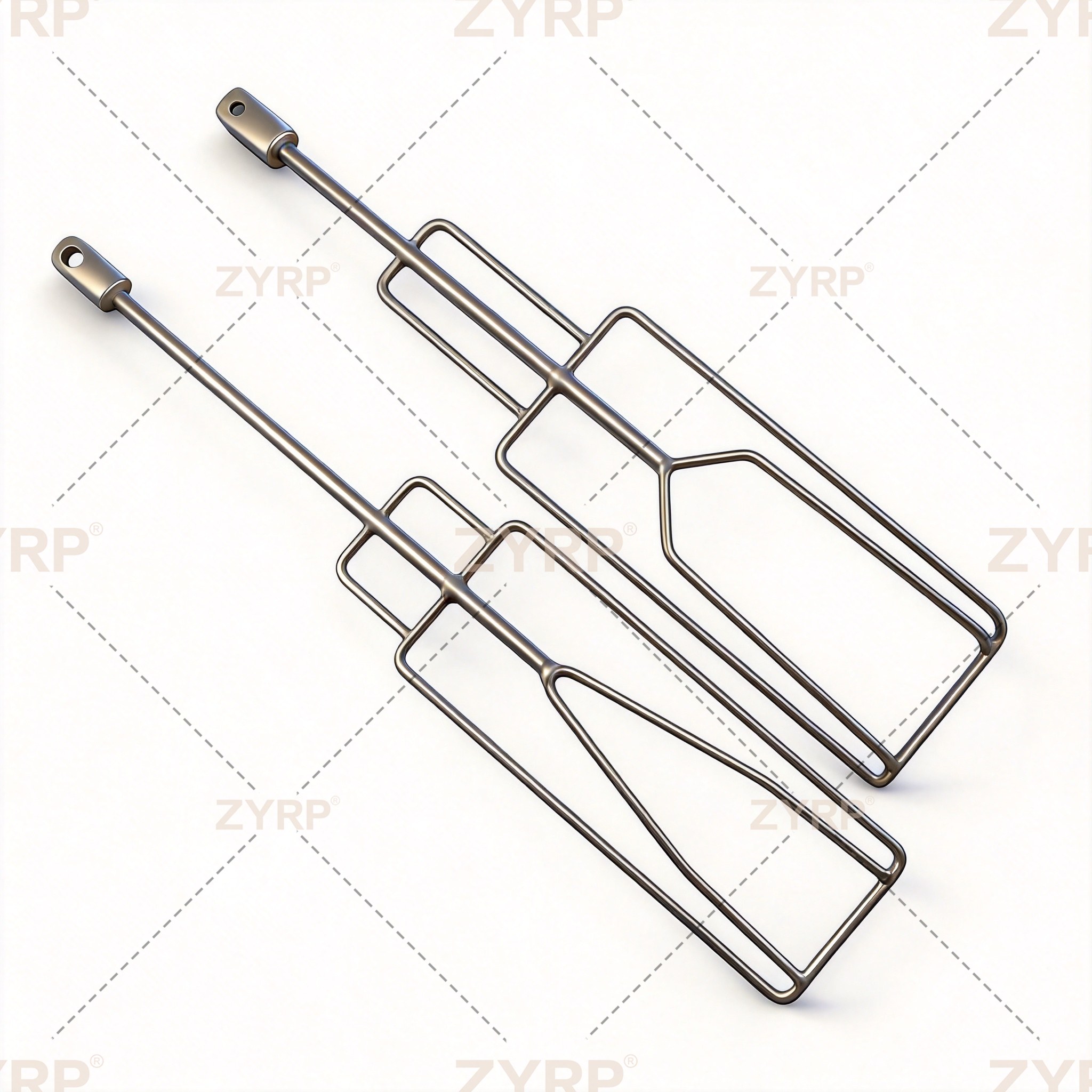
Stainless Steel Slaughter Split Hooks are heavy-duty, food-grade hanging hooks engineered for the overhead rail systems used in modern abattoirs, meat processing plants, and cold-storage facilities. Each hook is forged or cast from AISI 304 or 316 stainless steel, then precision-machined and passivated to deliver a smooth, non-porous surface that resists blood, fat, salt, and caustic wash-down chemicals. The split-hook geometry — a single stem that forks into two symmetrical, upward-curving prongs — is specifically designed to spread a split carcass or primal cut open, keeping the cut surfaces apart for faster chilling, cleaner inspection, and safer trimming.
This product is the workhorse component of any slaughter line. Whether you operate a high-throughput beef plant running 300 head per hour, a mid-sized pork facility, or a small sheep and goat abattoir, the split hook must survive tens of thousands of load-and-release cycles without bending, snagging, or harbouring bacteria. Our split hooks are built to that standard, with verified load ratings, fully welded or forged one-piece construction, and radiused tips that will not puncture hides, muscle tissue, or protective gloves.
Stainless steel grade. Standard production uses AISI 304 (EN 1.4301) stainless steel, which offers excellent resistance to organic acids, blood, and routine sanitising agents. For plants processing high-salt brine, coastal installations, or facilities using aggressive chlorinated and peracetic acid sanitation cycles, we recommend AISI 316 (EN 1.4401) with molybdenum addition for superior pitting resistance.
Forming method. Two manufacturing routes are available. The forged variant is hot-formed from solid bar stock, producing a continuous grain structure with no weld seam at the fork junction — the point of highest stress in service. The cast variant uses investment casting for complex geometry at a lower unit cost, with a fully annealed and pickled finish. Both are supplied with a documented material certificate to EN 10204 3.1 on request.
Surface finish. Standard finish is mechanical polish to Ra ≤ 0.8 μm, with an optional electropolished finish achieving Ra ≤ 0.4 μm. Electropolishing removes the microscopic peaks left by abrasive polishing, closing surface pores and reducing bacterial attachment. This matters: EHEDG and USDA guidance both emphasise that surface roughness above Ra 0.8 μm significantly increases biofilm retention in wet meat environments.
Tips and edges. All prong tips are fully radiused and deburred — no sharp points, no exposed weld spatter. Radiused tips protect carcass quality by eliminating puncture wounds that create trim loss and downgrade value, and they protect operators from hand injuries during the rapid hook-on/hook-off motion of a moving line.
Welds. Where welding is used (stem-to-shank assemblies, cross-bars), welds are full-penetration TIG welds, ground flush and passivated. No crevices are permitted at any joint, because crevices are the single most common harbourage point found in abattoir hygiene audits.
Parameter |
Standard Range |
Notes |
Material |
AISI 304 / 316 stainless steel |
316 for high-chloride wash-down |
Bar diameter (stem) |
12 mm – 20 mm |
16 mm most common for beef |
Prong diameter |
10 mm – 16 mm |
Tapered options available |
Overall length |
200 mm – 450 mm |
Custom lengths to 600 mm |
Prong spread (inner) |
80 mm – 220 mm |
Matched to carcass width |
Hook opening angle |
45° – 90° |
60° standard |
Working load limit (WLL) |
150 kg – 500 kg |
2:1 safety factor minimum |
Proof load tested |
2 × WLL |
Batch sampling |
Surface roughness |
Ra ≤ 0.8 μm (std) / ≤ 0.4 μm (EP) |
Electropolish optional |
Operating temperature |
−40 °C to +120 °C |
Steam-clean safe |
Fixing |
Bolt-on shackle, rail trolley, or swivel eye |
M12 / M16 threads |
Net weight |
0.6 kg – 2.4 kg per unit |
Varies with length |
Custom engineering is routine: prong spread, stem length, thread type, trolley interface, and colour-coded identification bands can all be specified to match your existing overhead rail.
A split hook hangs from a trolley running on an overhead I-beam or tubular rail. The operator guides the trolley to the station, lifts the split side of the carcass, and engages both prongs into the natural opening between the rounds or through the aitch bone, depending on species and cut. Gravity and the outward spring of the prongs hold the load; the two-point contact distributes weight evenly and prevents the carcass from rotating or swinging into neighbouring carcasses on a densely packed rail.
The critical functional advantage is separation. A single-prong hook lets the two halves of a split carcass fall together, trapping body heat in the contact zone. That trapped heat slows the chill curve, extends the time the carcass spends in the bacterial danger zone between 10 °C and 60 °C, and can cause dark cutting or bone sour. A properly sized split hook holds the halves apart, exposing the cut face to airflow and accelerating core temperature reduction. Plants frequently report measurable improvement in chill-index compliance after switching from single hooks to correctly spread split hooks.
The second advantage is inspection access. Veterinary inspectors need an unobstructed view of the cut surface, lymph nodes, and pleura. A split hook presents the carcass open and stable, so the inspector can work without asking for the line to stop.
Split hooks are a direct food-contact surface and must be designed for cleanability, not merely cleaned. Our hooks comply with the design principles of EN 1672-2 (food processing machinery — hygiene requirements) and are compatible with HACCP plan validation, EU Regulation 853/2004 hygiene rules for slaughterhouses, and USDA FSIS sanitation performance standards. Materials meet FDA 21 CFR 177 and EU Regulation 1935/2004 food-contact requirements, and 304/316 grades are listed as NSF/ANSI 51 acceptable materials.
Cleaning practice matters as much as material. Recommended routine: pre-rinse at 40–45 °C to remove blood and fat without protein denaturation, alkaline detergent wash at 60–70 °C, potable water rinse, and periodic acid descaling to remove mineral scale. Hooks should pass through a dedicated hook washer or a tunnel washer separate from carcass wash. Because there are no blind holes, crevices, or threaded recesses in the food-contact zone, water and detergent drain freely and drying is fast — a decisive advantage over plated carbon-steel hooks, whose coating chips and exposes corrodible substrate.
A properly specified 304 split hook in a two-shift beef plant typically delivers 5–8 years of service before retirement, and 316 units in high-chloride environments comparable figures. Common failure modes and how this design addresses them:
Every production batch is proof-load tested to twice the working load limit, and dimensional and material records are retained for traceability. We recommend annual visual inspection and a five-year proof-load re-test for safety-critical rail systems.
Specify the following when enquiring: species and average carcass weight, rail type and trolley interface, required prong spread, stem length, stainless grade, surface finish, and quantity per year. We supply split hooks individually, in line-sets, or as complete rail packages with trolleys, rail, switches, and down-pullers. Laser marking of plant identification, asset numbers, and colour-coded grade bands is available at no extra tooling cost.
Q: 304 or 316 — which should I choose? Choose 304 for standard red-meat plants with potable-water wash-down. Choose 316 if your wash water chloride exceeds roughly 200 mg/L, if you use chlorine dioxide or heavy peracetic acid, or if the plant is coastal. The cost premium is usually 20–30% and is recovered in avoided replacement.
Q: What working load limit do I need? Take your heaviest expected carcass weight and apply a minimum 2:1 safety factor. A 350 kg beef side calls for at least a 700 kg-rated hook for static hanging, and higher if there is dynamic shock loading from a down-puller or switching station. Standard catalogue ratings run to 500 kg; heavier ratings are available on request.
Q: Can the prongs be re-shaped on site? No. Bending stainless cold-worked bar introduces residual stress and is a common precursor to stress-corrosion cracking. Specify the correct spread at order; do not adjust hooks in the plant.
Q: Are the hooks dishwasher-safe? They are tunnel-washer safe at standard abattoir wash temperatures up to 70 °C, and steam-cleanable to 120 °C. They are not intended for domestic dishwashers.
Q: Do you supply material certificates? Yes — EN 10204 3.1 mill certificates, dimensional inspection reports, and proof-load test records are available with every order.

Hebei Zunyan Technology provides high-quality poultry processing spare parts for global meat processors. Our stainless steel & plastic eviscerating shackles, chains, and custom CNC components ensure durability, precision, and fast dispatch. 30+ production lines, ISO-aligned quality, 48h shipping. Request quote today.
1901, Unit C19, Tongrui Business Building, Changjiang Sub-district, Yuhua District, Shijiazhuang City, Hebei Province, China
Copyright © 2026 Hebei Zunyan Technology Co., Ltd. All Rights Reserved Privacy Policy
 EN