Choosing between a slaughter hook and a poultry shackle depends on the task each item must perform, not simply its appearance. A slaughter hook typically supports or moves a bird at a particular handling stage, while a shackle is designed to suspend birds from a line. Understanding this duty distinction helps buyers specify the right equipment and avoid a poor fit. The slaughter hook should be assessed against the actual process, not selected by name alone.
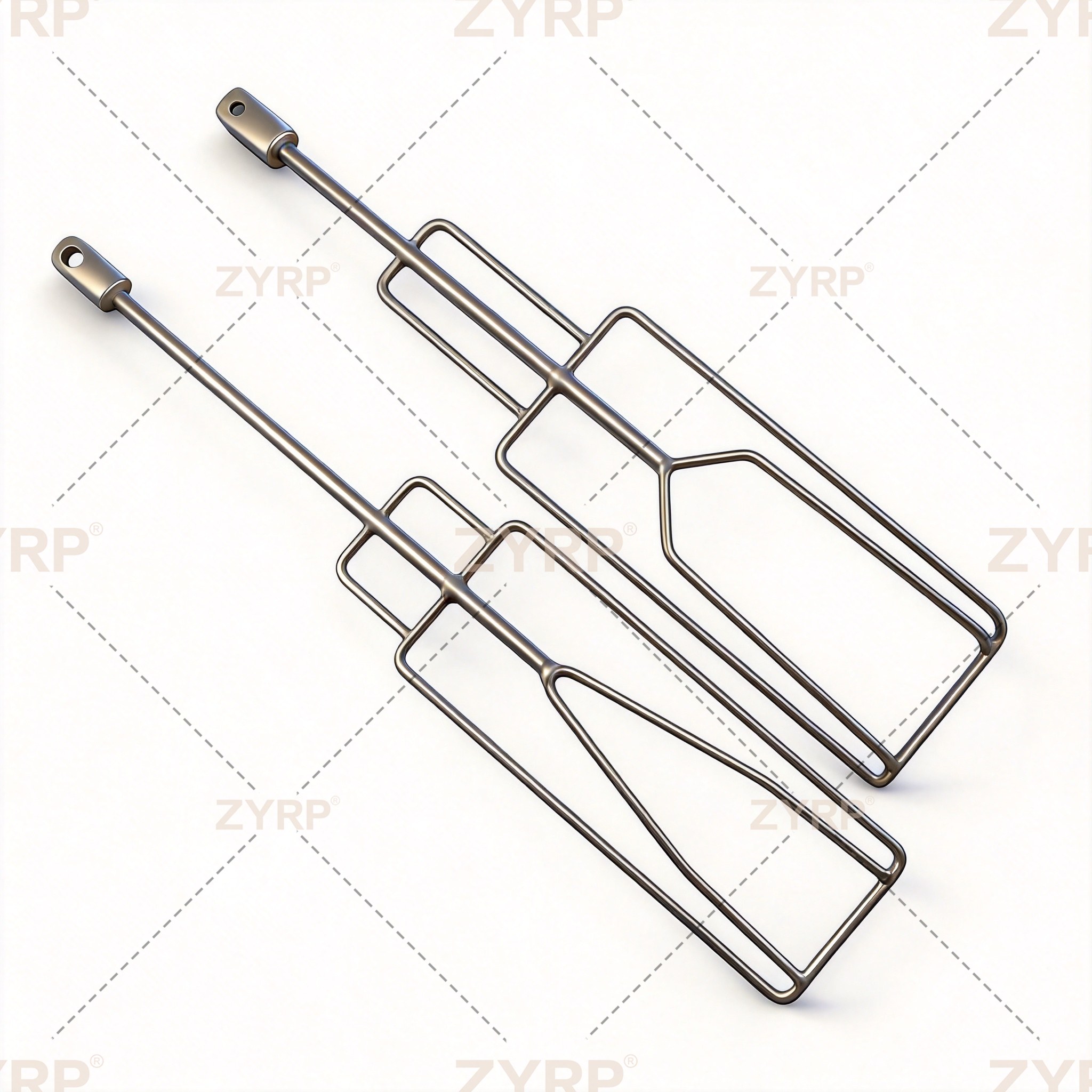
The practical comparison is about duty, attachment, movement, and cleaning requirements. A slaughter hook may suit a specific manual transfer or support point, whereas a poultry shackle usually belongs to a conveying system and holds birds in a repeatable position. For procurement teams, defining where the slaughter hook or shackle operates is the first step toward a sound specification.
A slaughter hook is generally considered for localized handling: an operator needs to catch, support, or move a carcass or bird at a defined point. Its duty is shaped by the contact surface, working angle, and handling method. A slaughter hook should therefore be evaluated for how it engages the load, rather than assumed to replace a shackle on a continuous line.
A poultry shackle has a different operating purpose: it suspends a bird by the legs as the overhead conveyor carries it through a processing sequence. That repeatable suspension helps maintain position between stations. A slaughter hook may be useful in a manual transfer or a specialized work area, but it does not automatically provide the same retention and line-interface function as a shackle.
Duty includes the way equipment connects to surrounding tools and workflow. A slaughter hook used away from a conveyor may need to suit a hand-held process, a trolley, or a designated support point. In contrast, a shackle must match the line’s carrier arrangement and movement. A slaughter hook choice is incomplete until the connection and route of travel are understood.
Map the work sequence before comparing shapes. Identify where birds are received, transferred, suspended, and removed, then note whether movement is manual or conveyor-driven. This shows whether the slaughter hook serves an isolated handling need or whether a poultry shackle is required for continuous suspension. Such mapping also helps teams avoid buying equipment that fits one station but interrupts the overall process.
The relevant load is not only the bird’s weight; operators should consider how the load is applied, how often it moves, and whether handling is steady or variable. A slaughter hook must provide a suitable engagement for its intended task without awkward positioning. A poultry shackle must retain the legs as the bird travels. A slaughter hook specification should reflect the real handling conditions.
Review the working orientation and contact points, including the risk of slipping, excessive movement, or difficult release. A slaughter hook used for manual handling may be judged by control and ease of use, while shackle duty is linked to stable suspension during line travel. Neither item should be assigned a load rating based on appearance; use documented specifications and the facility’s operating requirements.
Food-processing environments make cleanability an essential part of duty. Check whether surfaces, joints, and contact areas can be inspected and cleaned using the site’s established sanitation procedure. A slaughter hook should be reviewed for residue traps and wear points, just as a poultry shackle should be checked for damage that could affect retention. Material selection must also suit the cleaning chemicals and conditions in use.
Maintenance planning matters because worn or distorted handling equipment can become difficult to control. Set inspection intervals based on actual use, sanitation demands, and the facility’s maintenance system. Record visible damage, deformation, corrosion, or loose connections, and remove questionable items from service for review. A slaughter hook that remains easy to inspect is more practical to manage; shackle checks should likewise be part of routine line care.
For a manual transfer point, assess whether a slaughter hook gives the operator the needed control and whether the load can be placed or released safely. For overhead transport, confirm that a poultry shackle is compatible with the conveyor and the required bird position. A slaughter hook should not be chosen merely because it is available; match the equipment to the station’s defined function.
In a small processing area, operators may handle more tasks manually, making compact handling tools useful at specific stages. A slaughter hook can be considered where the workflow requires a controlled catch or transfer, provided the procedure and equipment are suitable. At a higher-throughput line, a poultry shackle may be the more relevant component wherever birds must remain suspended during conveyance. The slaughter hook still has a distinct, localized role.
A useful specification describes application, attachment, expected load, handling frequency, cleaning method, and inspection needs. Include photos or measurements of the existing connection when requesting a replacement, and verify fit before installation. For a slaughter hook, clarify the exact task and support method. For a shackle, confirm conveyor compatibility and the required suspension arrangement rather than relying on a general product label.
Before routine use, verify that the selected item is installed as intended and that staff understand its limits. Review the working procedure after changes to line layout, bird size, or transfer method. Keep the slaughter hook assigned to its defined task instead of using it as an improvised substitute for a shackle. This clear separation supports more consistent operation, inspection, and purchasing decisions.
Usually, they serve different duties, so replacement is not automatic. A slaughter hook may suit a defined manual handling task, while a poultry shackle suspends birds from a conveyor. Confirm the required function, attachment, and operating procedure before treating a slaughter hook as an alternative.
Start with the station, load, handling method, and connection point. Then confirm material suitability, cleaning requirements, and inspection expectations. For a slaughter hook, describe exactly how it contacts and moves the load; for a shackle, verify its fit with the line and suspension task.
Review equipment during procurement, after workflow or conveyor changes, and whenever wear or deformation is observed. A slaughter hook that no longer engages predictably should be checked before continued use. Apply the facility’s maintenance procedure, and verify that the chosen equipment still matches its assigned duty.
 Hot News
2026-11-23
2026-11-16
2026-11-09
2026-11-02
2026-10-29
2026-10-22

Hebei Zunyan Technology provides high-quality poultry processing spare parts for global meat processors. Our stainless steel & plastic eviscerating shackles, chains, and custom CNC components ensure durability, precision, and fast dispatch. 30+ production lines, ISO-aligned quality, 48h shipping. Request quote today.
1901, Unit C19, Tongrui Business Building, Changjiang Sub-district, Yuhua District, Shijiazhuang City, Hebei Province, China
Copyright © 2026 Hebei Zunyan Technology Co., Ltd. All Rights Reserved Privacy Policy
 EN