The performance of poultry blades knife systems directly influences both product quality and operational profitability in commercial meat processing facilities. When cutting efficiency declines due to blade wear, the financial consequences extend far beyond the cost of replacing dull equipment. Studies consistently demonstrate that degraded blade performance correlates with measurable meat yield loss, increased processing time, and higher operational expenses. Understanding the mechanics of knife wear and its relationship to yield loss enables processors to implement targeted maintenance strategies that preserve both product value and production throughput.
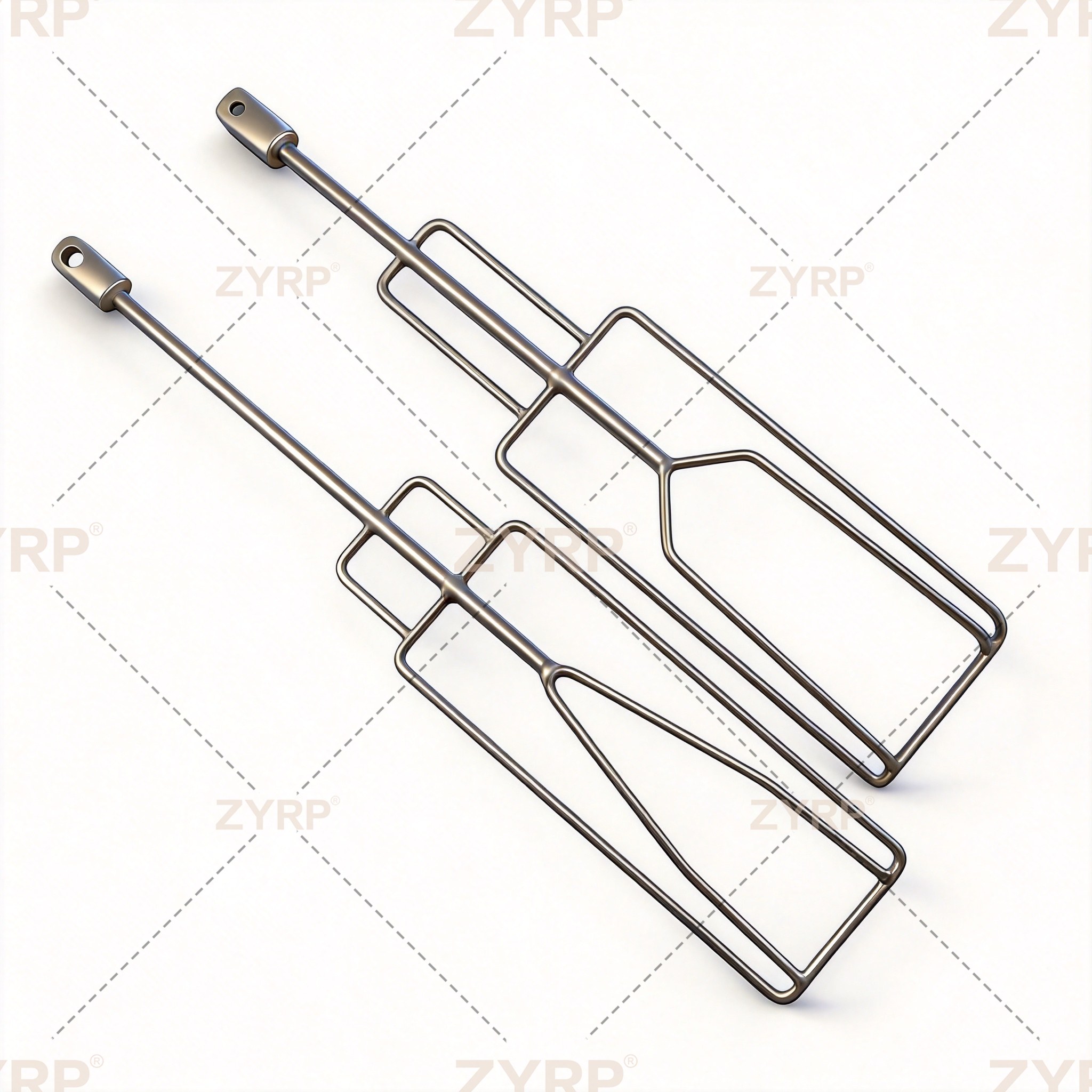
Modern poultry processing relies on precision cutting at high speeds, where blade sharpness is not merely a convenience factor but a critical control point for yield optimization. As poultry blades knife systems accumulate processing hours, microstructural changes in the cutting edge gradually reduce their ability to make clean, precise cuts. This degradation manifests as increased friction, ragged meat surfaces, and inconsistent portion sizing. The consequences ripple through the supply chain: damaged tissue has shorter shelf life, bruised portions require trimming, and irregularly sized cuts reduce the value of premium product categories. By examining the wear patterns of poultry blades knife equipment and their direct link to yield metrics, processors can establish evidence-based replacement schedules and maintenance protocols that maximize return on investment.
Blade wear in poultry processing occurs through several simultaneous mechanisms that accelerate cutting edge degradation. Abrasive wear happens when bone particles and mineral compounds in the poultry matrix scratch the blade surface, progressively removing material from the cutting edge. Adhesive wear occurs when proteins and lipids from the meat itself bond to the blade, creating friction that pulls away microscopic layers of blade steel. Corrosive wear accelerates when moisture and salt from the product interact with the blade material, particularly on stainless steel surfaces where passivation becomes compromised. Poultry blades knife systems experience these three wear modes simultaneously, creating a combined deterioration rate that is faster than single-mode wear would suggest. The microstructure of the blade itself influences wear resistance, with blade hardness, toughness, and carbide composition all affecting how quickly the cutting edge degrades.
The wear rate of poultry blades knife equipment accelerates non-linearly during a processing cycle. Initial wear occurs slowly as the blade surface reaches optimal geometry through micro-texturing. Middle-stage wear, typically occurring between 40 and 80 percent of blade service life, shows linear progression as the cutting edge gradually rounds and dulls. Final-stage wear accelerates sharply as edge geometry deteriorates beyond functional tolerances, resulting in dramatically reduced cut quality. Detection of poultry blades knife wear traditionally relies on visual inspection or subjective feel assessments, but more sophisticated facilities employ high-speed imaging, force sensors, or acoustic monitoring to detect precise threshold points. Understanding the shape of the wear curve for your specific poultry blades knife configuration allows processors to anticipate yield loss before it reaches economically significant levels.
Degraded poultry blades knife performance directly increases the volume of meat trimmed away as waste. When a blade becomes dull, its cutting action transitions from a clean slice to a crushing and tearing motion that damages cellular structure in the surrounding tissue. This damaged tissue exhibits discoloration, oxidation, and bacterial growth that makes it unsuitable for premium product categories. Processors must trim affected areas to maintain product quality and food safety standards. Research demonstrates that a blade worn to 70 percent of its service life can generate 2 to 4 percent additional trim loss compared to a sharp blade, representing significant volume when applied across thousands of birds processed daily. For a facility processing 10,000 birds per shift, this poultry blades knife wear effect translates to 200 to 400 additional pounds of lost value per shift, or $500 to $1,200 daily depending on product mix and market pricing.
Inconsistent cut precision caused by wear in poultry blades knife systems creates variation in portion sizes, which reduces the value realization of premium products. When blade geometry deteriorates, the force required to complete a cut varies, causing operators to make compensatory pressure adjustments that result in portions that deviate from target weight ranges. Overweight portions reduce per-unit profitability, while underweight portions often fall below customer specifications and must be reworked or downgraded. Poultry blades knife wear also increases cut inconsistency between individual birds, creating more portions that fall into secondary grades rather than premium categories. Data from processing facilities indicates that blade wear beyond acceptable thresholds increases the coefficient of variation in portion weights by 15 to 25 percent, with corresponding reductions in premium product yield of 3 to 6 percent.
As poultry blades knife systems wear, the mechanical force required to complete each cut increases substantially. Dull blades require greater operator pressure, longer cutting duration per bird, and more frequent pauses to re-position the product. Line supervisors often respond to reduced efficiency by reducing processing line speed to maintain product quality, which directly decreases facility throughput. A worn poultry blades knife system operating at 85 percent blade sharpness typically reduces line speed by 5 to 10 percent, resulting in proportional reductions in daily bird throughput. For a facility designed to process 50,000 birds daily, this efficiency loss represents 2,500 to 5,000 birds of lost capacity daily, equivalent to $5,000 to $12,000 in lost processing opportunity cost.
Dull poultry blades knife equipment creates occupational safety hazards beyond those associated with sharp knives. Operators applying excessive pressure to compensate for dull blades experience elevated repetitive stress injury risk, cumulative trauma, and fatigue-related mistakes. Dulled blades also introduce slippage risk during cutting strokes, potentially causing uncontrolled blade movement that increases laceration probability. Regulatory compliance with OSHA ergonomics standards and occupational safety directives requires that facilities maintain poultry blades knife equipment within defined sharpness parameters. Beyond compliance, worker productivity and retention improve when cutting requires minimal compensatory force, reducing fatigue-related errors and operator downtime. Facilities that fail to maintain poultry blades knife systems at optimal sharpness experience higher workers' compensation claims, increased employee turnover, and elevated regulatory scrutiny.
Replacement frequency for poultry blades knife systems depends on blade material, processing volume, bird type, and facility-specific wear conditions. Most commercial facilities replace poultry blades knife blades every 8 to 12 processing hours under normal conditions, though some facilities sharpen blades in-place between replacements. High-volume facilities often operate on a predictive maintenance schedule, replacing poultry blades knife equipment based on objective wear measurements rather than fixed time intervals. This approach minimizes both premature replacement costs and yield loss from operating beyond optimal wear thresholds.
Objective measurement of poultry blades knife wear includes blade edge radius measurement using optical or tactile methods, cutting force monitoring through load cells, high-speed video analysis of cut quality, and product quality metrics such as trim loss percentage and portion weight variation. Most facilities establish internal standards defining maximum acceptable blade edge radius (typically 0.5 to 1.0 millimeters) and establish replacement triggers when this threshold is approached. Monitoring poultry blades knife performance against these objective standards enables data-driven replacement decisions that optimize yield outcomes.
Yes, advanced blade materials including high-carbon stainless steel, ceramic composites, and specialized carbide coatings can extend poultry blades knife service life by 20 to 50 percent compared to conventional stainless steel blades. Blade geometry modifications such as micro-beveled edges, reduced blade thickness, or optimized edge angles can also improve both cutting efficiency and wear resistance. However, blade material and geometry changes must be validated against your specific processing parameters, product types, and existing equipment compatibility before implementation. Investment in premium poultry blades knife materials is economically justified when extended service life yields greater value than the incremental blade cost.
 Hot News
2026-11-23
2026-11-16
2026-11-09
2026-11-02
2026-10-29
2026-10-22

Hebei Zunyan Technology provides high-quality poultry processing spare parts for global meat processors. Our stainless steel & plastic eviscerating shackles, chains, and custom CNC components ensure durability, precision, and fast dispatch. 30+ production lines, ISO-aligned quality, 48h shipping. Request quote today.
1901, Unit C19, Tongrui Business Building, Changjiang Sub-district, Yuhua District, Shijiazhuang City, Hebei Province, China
Copyright © 2026 Hebei Zunyan Technology Co., Ltd. All Rights Reserved Privacy Policy
 EN