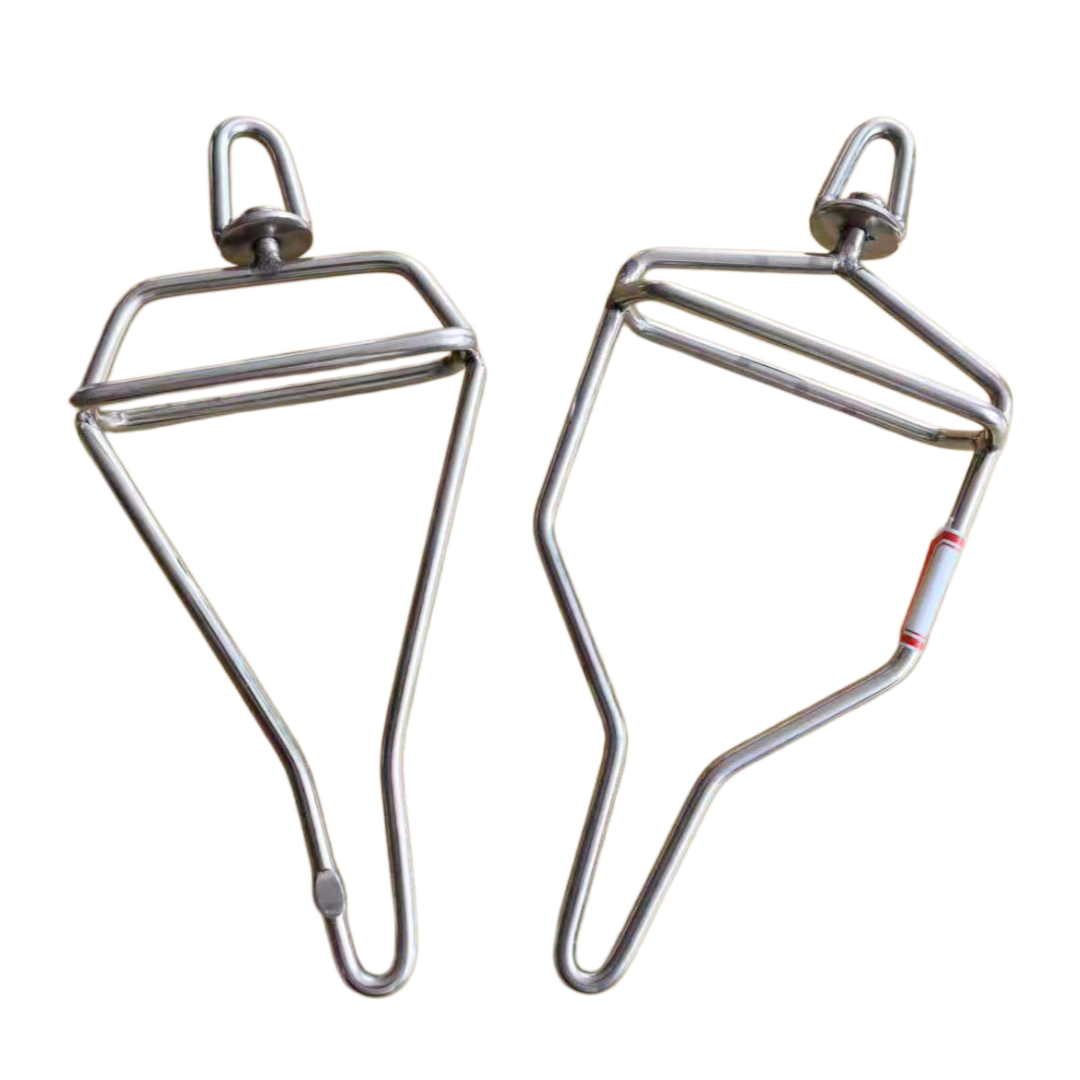
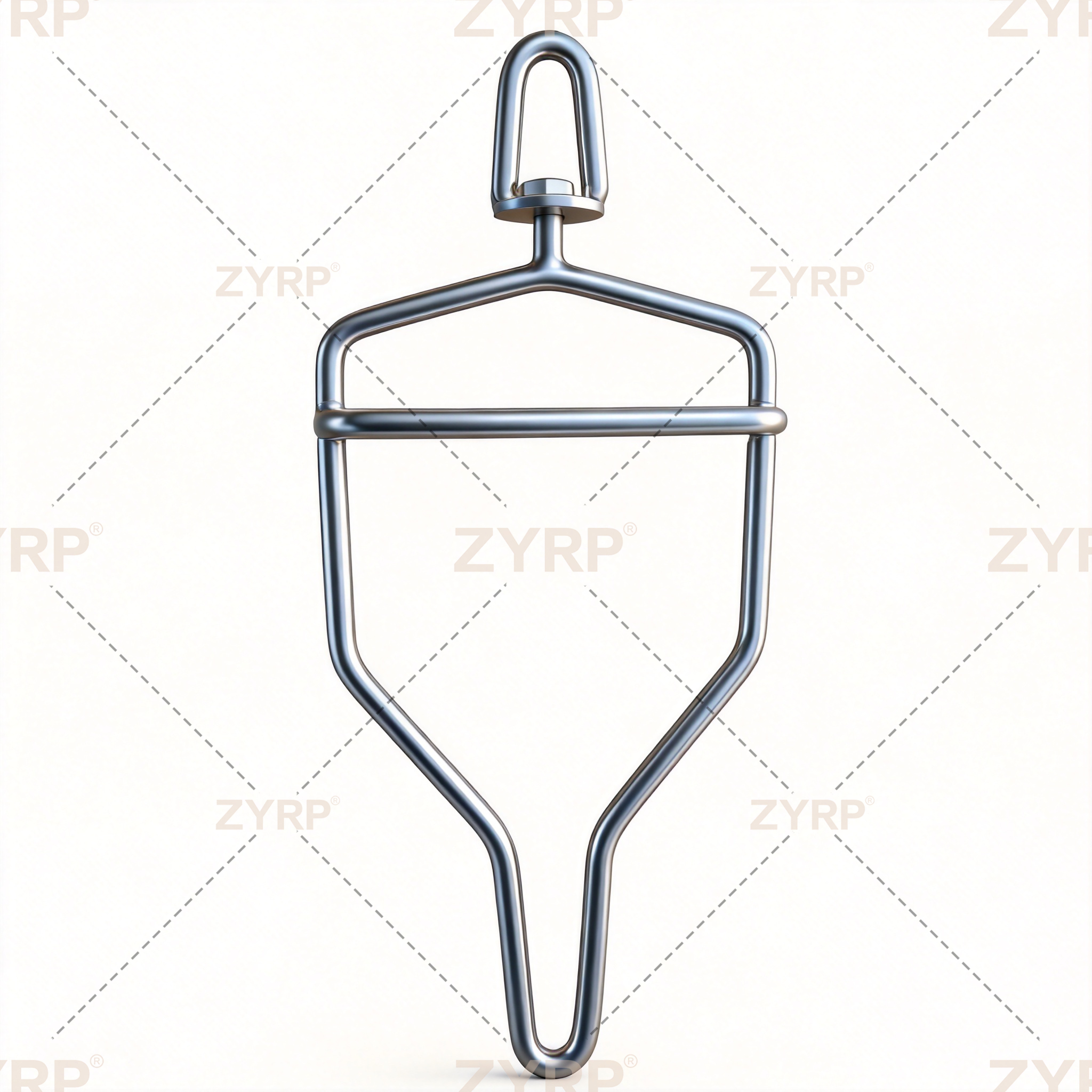
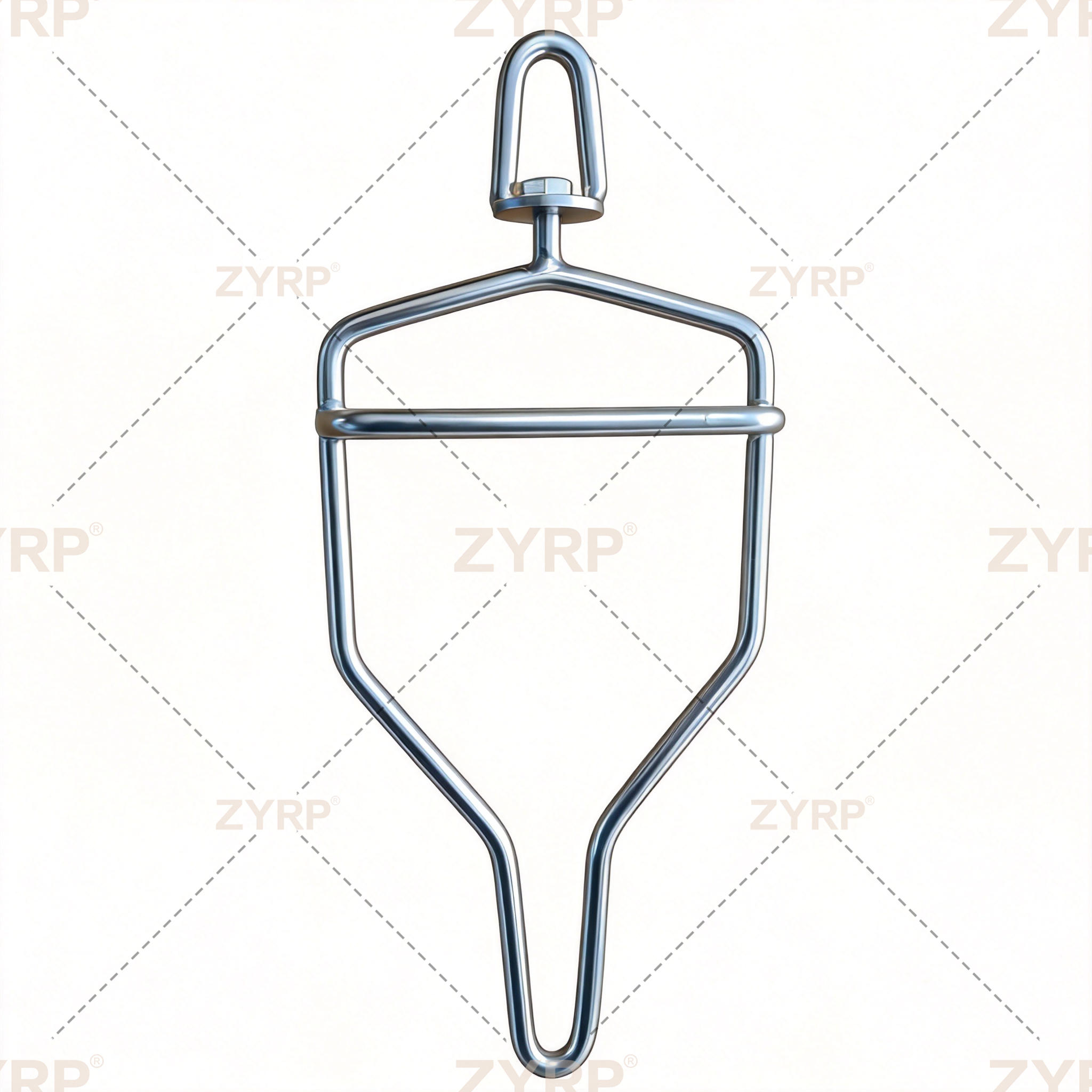
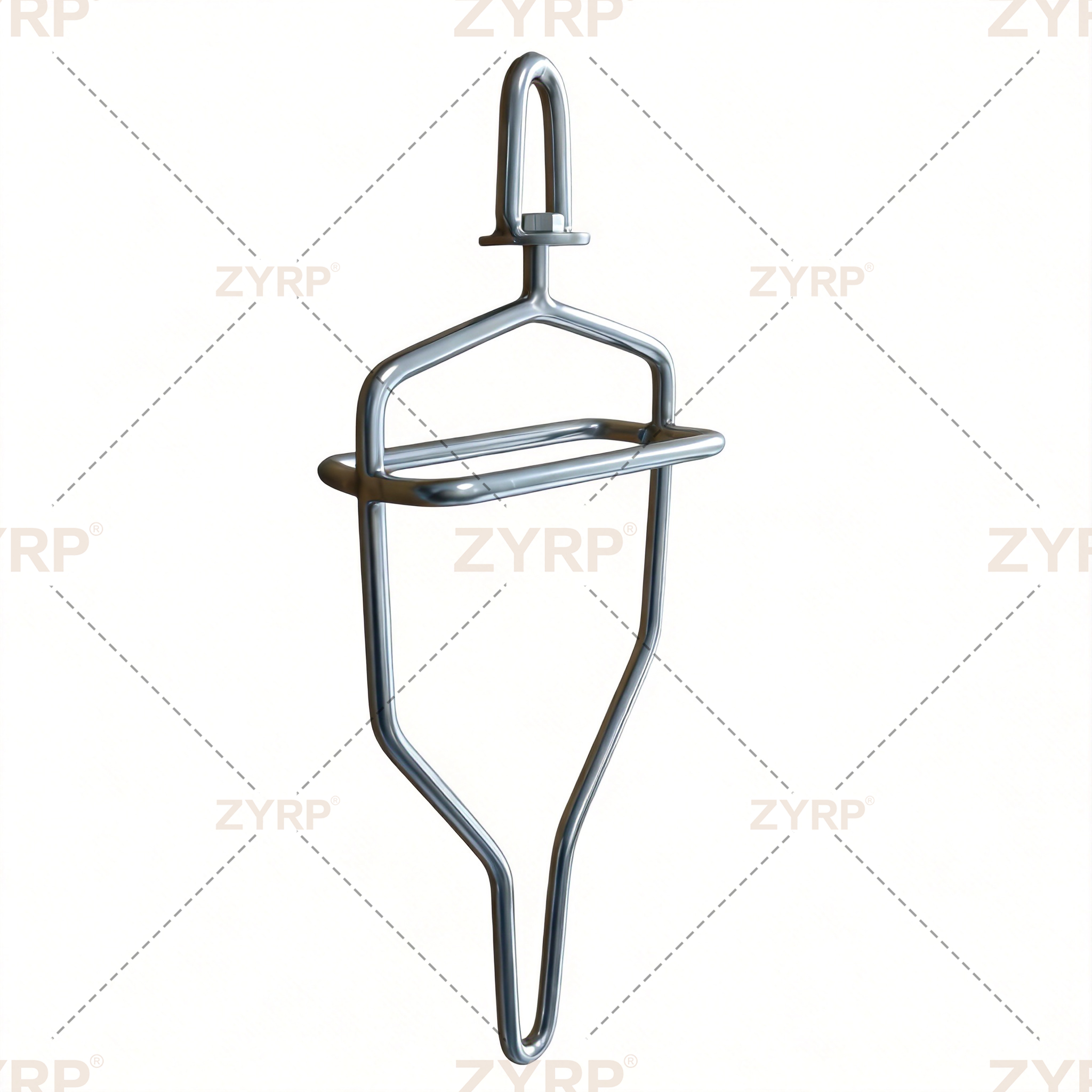
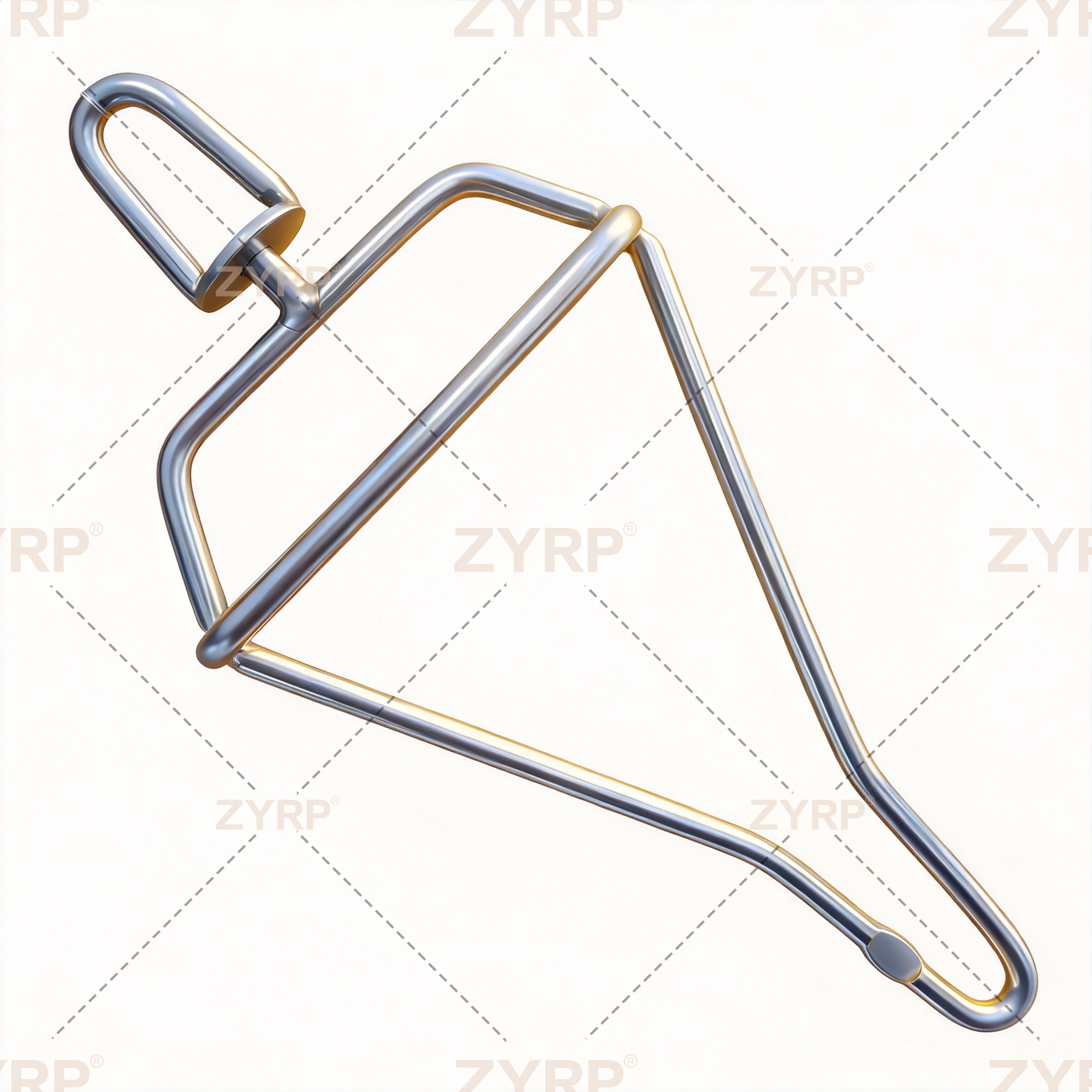
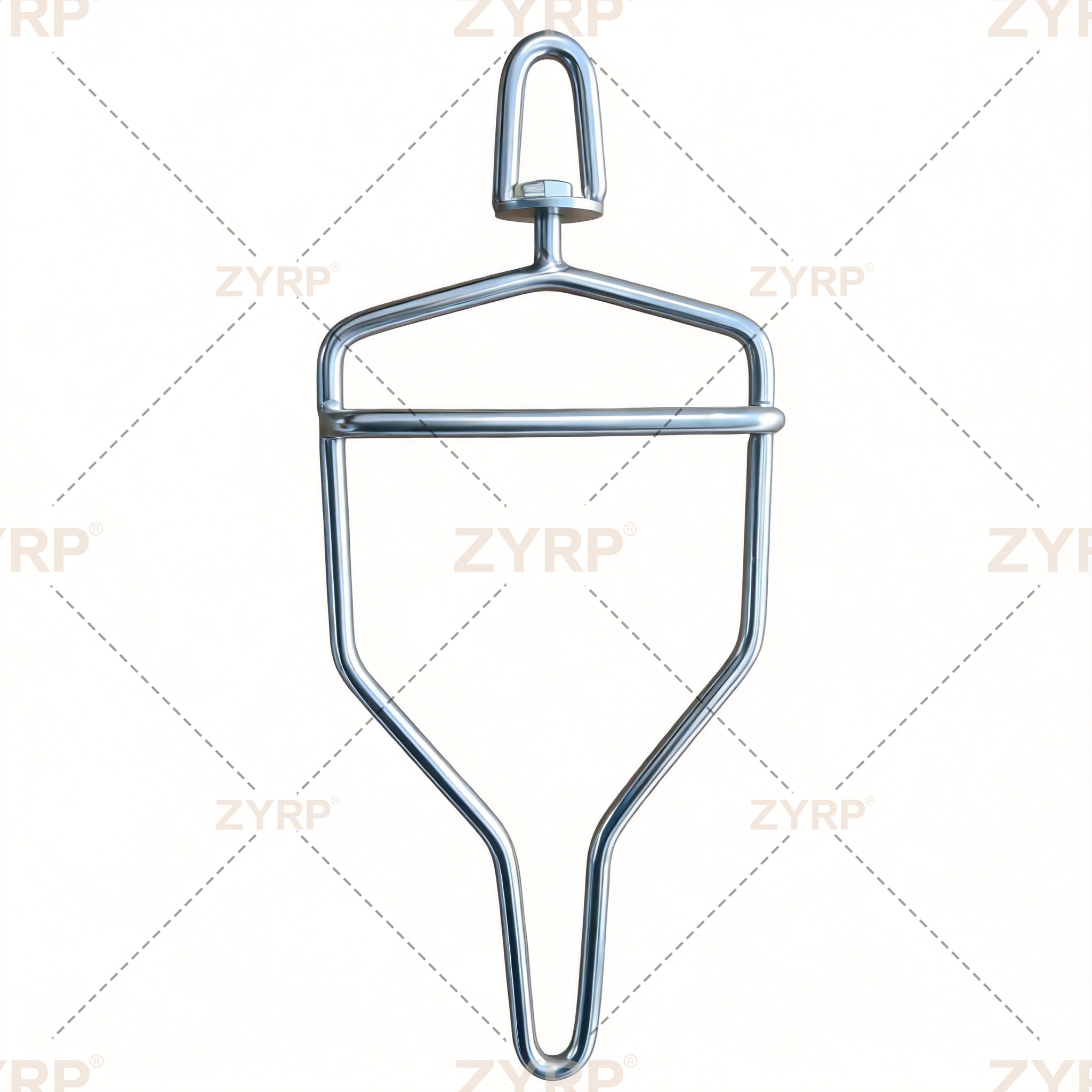
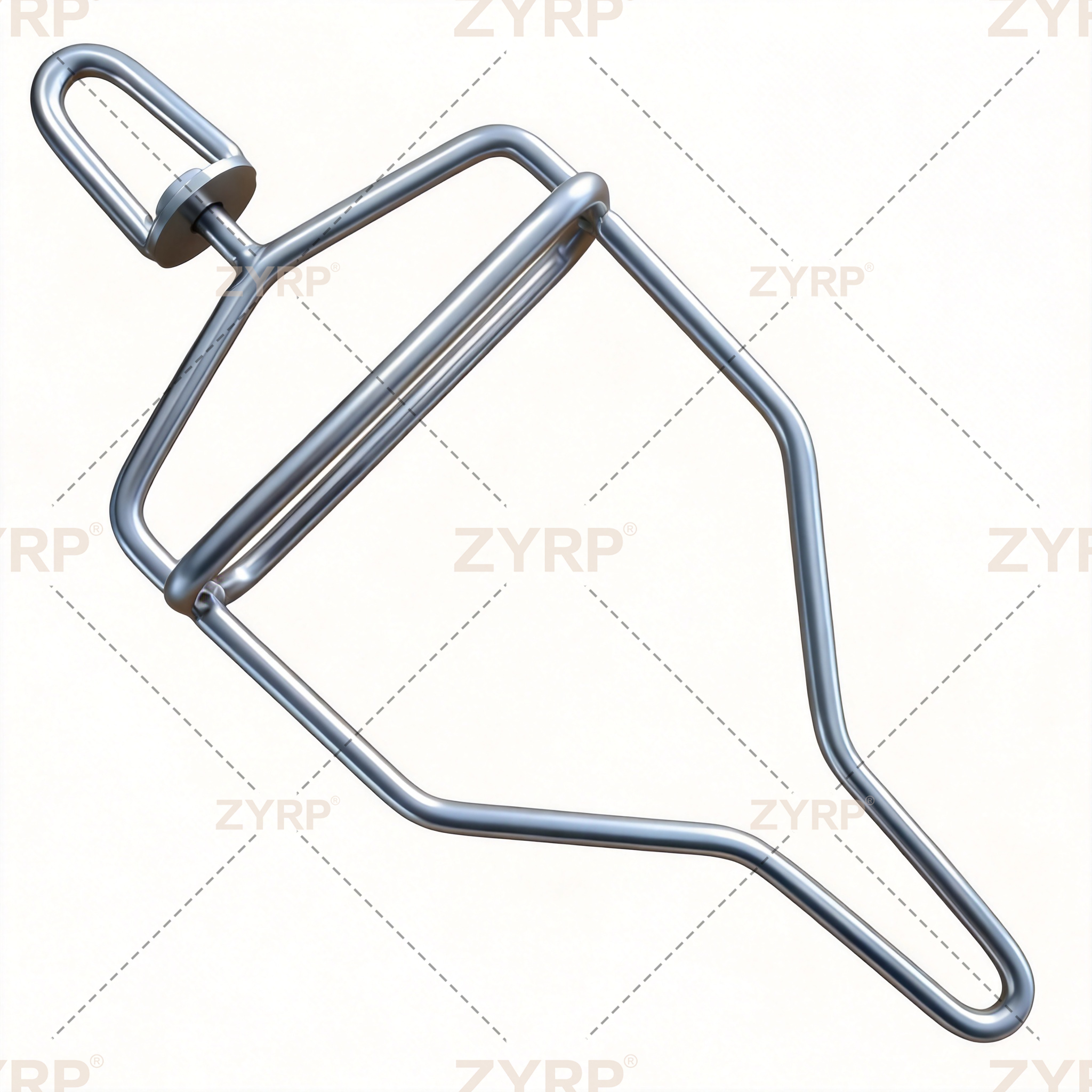
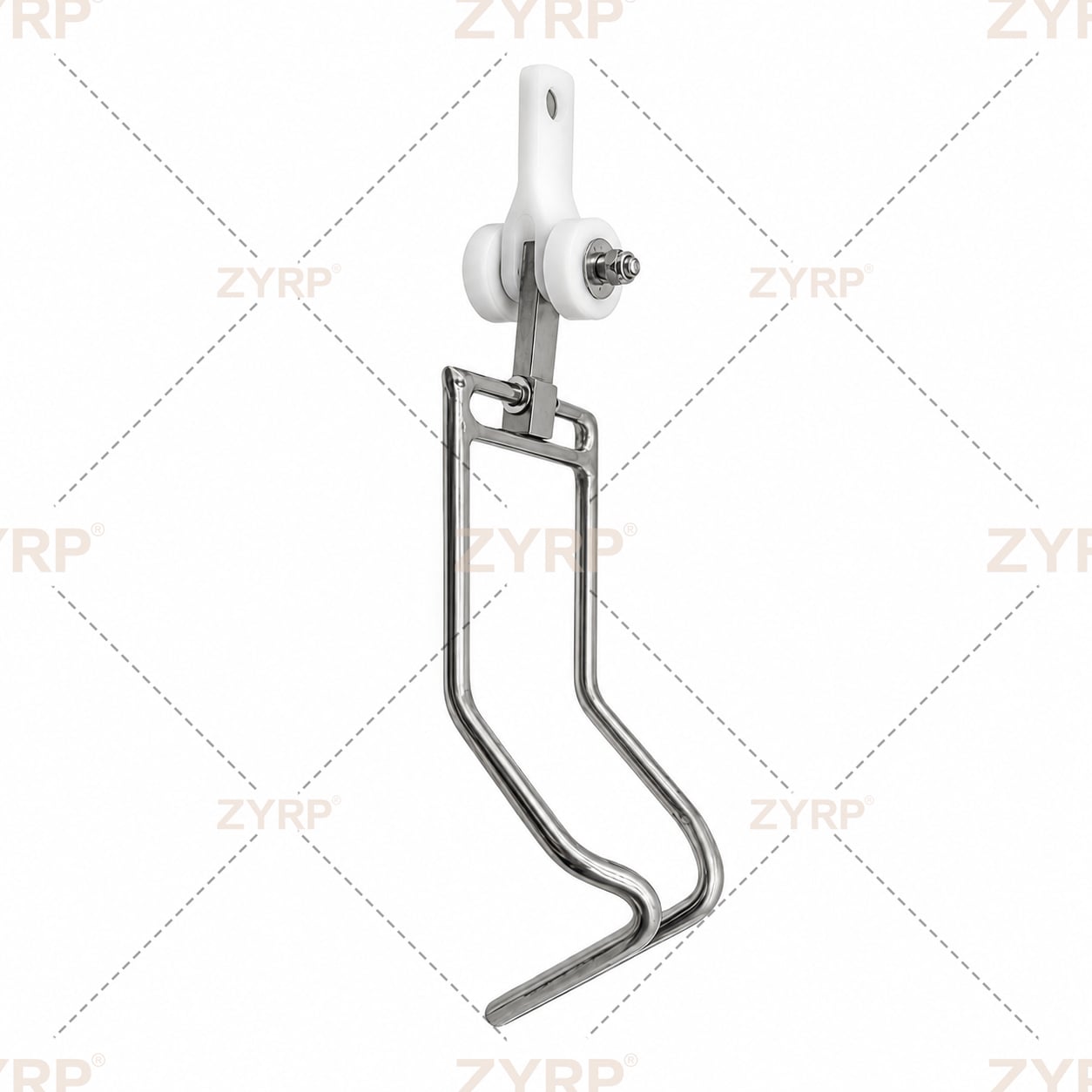
Food Grade Stainless Steel Eviscerating Hanging Hook for Poultry Slaughter Line Conveyor System
The Food Grade Stainless Steel Eviscerating Hanging Hook is a precision component engineered for the evisceration stage of high-speed poultry slaughter line conveyor systems. Mounted at fixed pitch on a shackle carrier or overhead chain conveyor, it suspends each bird by the hock through the evisceration, inspection, washing and chilling stages without releasing the load. The hook body is formed from AISI 304 or 316L stainless steel bar, robotically welded, ground flush and passivated, producing a food grade stainless steel hook with a continuous, crevice-free food-contact surface that withstands the caustic and acidic sanitation cycles typical of poultry processing.
At line speeds from 6,000 up to 15,000 birds per hour, a single conveyor system may carry 4,000 to 8,000 hooks. Each hook therefore performs roughly 100,000 load cycles per year. The eviscerating hanging hook must remain dimensionally stable across that duty, because a shift of even 2 mm in the hock cradle geometry changes bird orientation at the eviscerator, causing organ damage, faecal contamination and downgrade. This hook is engineered around that constraint: fixed geometry, verified spring retention and a hygienic design that no poultry meat hook audit can fault.
Material specification. Standard production uses AISI 304 (EN 1.4301) stainless steel, with 316L (EN 1.4404) offered for plants using high-chloride wash water, chlorine dioxide, or peracetic acid sanitation. Both grades are food grade stainless steel grades listed under FDA 21 CFR 177 and EU Regulation 1935/2004; 316L additionally meets NSF/ANSI 51 requirements for food-zone contact. Low-carbon 316L is preferred where the hook is heavily welded, because it resists sensitisation and intergranular corrosion in the heat-affected zone.
Forming. The hook is cold-formed from solid round bar between 6 mm and 10 mm diameter, then TIG-welded to the shank with full penetration. Weld zones are ground flush and re-passivated so the food-contact surface is monolithic. No tubular sections, no rolled sheet, no blind holes — a design decision driven by cleanability rather than cost.
Geometry. The hock cradle is a radiused U-form sized to the species: 26–30 mm for broiler, 34–40 mm for turkey and heavy fowl. The retaining spring, whether a stainless torsion wire or an integral leg, applies a controlled closing force of 15–25 N — enough to hold a 3.5 kg bird through a spray wash and an air-blast, low enough that operators can load one-handed at 25–35 birds per minute.
Surface finish. Standard mechanical polish achieves Ra ≤ 0.8 μm; electropolishing brings the surface to Ra ≤ 0.4 μm and removes the free iron left by machining. In poultry plants this is not cosmetic: the evisceration zone is the wettest, most soil-loaded part of the line, and surface roughness above Ra 0.8 μm measurably increases biofilm retention on food grade stainless steel hook surfaces.
Interfaces. Hooks are supplied with a trolley-mount clevis, a threaded stem (M8/M10), or a proprietary carrier fit matched to the customer's conveyor. Hook pitch — typically 152 mm, 203 mm or 305 mm — must be specified, since it defines shackle spacing and therefore eviscerator timing.
Parameter |
Value |
Material |
AISI 304 / 316L stainless steel |
Bar diameter |
6 mm / 8 mm / 10 mm |
Overall length |
120 mm – 260 mm |
Hock cradle width |
26–30 mm broiler / 34–40 mm turkey |
Working load |
5 kg – 15 kg per hook |
Spring closing force |
15–25 N |
Surface roughness |
Ra ≤ 0.8 μm (std) / ≤ 0.4 μm (EP) |
Hook pitch compatibility |
152 / 203 / 305 mm |
Operating temperature |
−30 °C to +95 °C |
Steriliser compatibility |
82–85 °C scald / immersion |
Weight |
90 g – 180 g per unit |
Certification |
FDA 21 CFR 177, EU 1935/2004, EN 1672-2 |
The eviscerating hanging hook traverses the harshest sequence on the line. After stunning, bleeding and scalding, the bird enters the plucker, then transfers to the evisceration conveyor where the hook must present the carcass at a repeatable height and angle for the vent cutter, the opening cut, the eviscerator spoon and the lung and crop extractors. Every one of those machines is set to a single reference geometry. Hooks that bend, spring open under load, or wear at the cradle radius will drift out of that reference and generate rejects downstream.
Three design features protect repeatability. First, the fork is closed and welded rather than left open, so the cradle cannot spread under sustained load. Second, the spring leg is formed from corrosion-resistant spring-tempered stainless wire rated for more than 200,000 cycles without measurable loss of closing force. Third, the shank is hardened at the trolley interface, where repeated metal-on-metal contact otherwise ovalises the mounting eye and introduces swing.
The result is stable carcass orientation at speeds up to 15,000 birds per hour, reduced organ damage at the eviscerator, and fewer line stops for hook replacement. Plants operating high-capacity eviscerating lines typically report that hook geometry drift — not breakage — is the dominant cause of evisceration defects, which is why the specification focuses on stiffness and fatigue life rather than on ultimate strength.
Poultry evisceration is the highest-risk zone for cross-contamination in the plant. Campylobacter and Salmonella transfer is driven by contact surfaces, spray aerosols and shared water; the conveyor hook is a contact surface that touches every bird. Cleanability is therefore a functional requirement, not a finish option.
This food grade stainless steel hook meets the hygiene design principles of EN 1672-2 and supports HACCP plan validation under EU Regulation 853/2004 and USDA FSIS sanitation performance standards. The food-contact zone has no crevices, no blind holes, no exposed threads and no overlapping joints; the spring is fully captured so it cannot trap tissue. Drainage is free in every orientation, which allows fast drying between the washer and the eviscerator — the period when residual moisture most strongly predicts biofilm formation.
Recommended cleaning protocol: pre-rinse at 40–45 °C, alkaline detergent at 60–70 °C in a dedicated hook washer, potable rinse, then periodic acid descaling. Hooks should also pass through the in-line steriliser at 82–85 °C, and a documented daily inspection should confirm spring tension and cradle geometry. Replace hooks in sets rather than individually so that eviscerator settings remain valid across the whole conveyor.
Under two-shift operation, a 304 hook in a broiler plant typically delivers 4–6 years of service; 316L units in aggressive chloride environments are comparable. Failure modes and mitigations:
Batch records, dimensional inspection and material certificates to EN 10204 3.1 are retained for traceability, and every hook is dimensionally gauged at the cradle before packing.
To quote accurately, please confirm: species and average bird weight, line speed in birds per hour, conveyor type and hook pitch, required cradle width, stem or clevis interface, stainless grade, surface finish and annual quantity. Hooks are supplied individually, in conveyor sets sized to your chain length, or as part of a complete poultry slaughter line conveyor system package including shackles, chain, drives, tensioners and steriliser units. Laser marking of plant code, asset number and installation date is available, together with colour-coded grade bands for species segregation.
304 or 316L? 304 for standard plants on potable-water wash-down. Choose 316L where wash water chloride exceeds 200 mg/L, where chlorine dioxide or peracetic acid is used, or for coastal sites. The premium is recovered in avoided mid-life replacement.
Can hooks be re-bent on site? No. Cold-bending stainless bar leaves residual stress that initiates stress-corrosion cracking, and it destroys the dimensional reference the eviscerator depends on. Specify cradle width at order.
How often should hooks be replaced? Replace as a full set every 4–6 years, or sooner if daily inspection shows spring force below specification or cradle width drift greater than 1 mm.
Are the hooks steriliser-rated? Yes — they are rated for continuous immersion at 82–85 °C and tolerate steam cleaning to 95 °C.
Do you supply certificates? Yes: EN 10204 3.1 mill certificates, dimensional reports and spring-force test data accompany every batch.

Hebei Zunyan Technology provides high-quality poultry processing spare parts for global meat processors. Our stainless steel & plastic eviscerating shackles, chains, and custom CNC components ensure durability, precision, and fast dispatch. 30+ production lines, ISO-aligned quality, 48h shipping. Request quote today.
1901, Unit C19, Tongrui Business Building, Changjiang Sub-district, Yuhua District, Shijiazhuang City, Hebei Province, China
Copyright © 2026 Hebei Zunyan Technology Co., Ltd. All Rights Reserved Privacy Policy
 EN